
Why Automated SEO Tools Can’t Replace a Human Local Audit
The rain had just stopped, and the smell of wet concrete rose from the sidewalk as I walked past the shuttered storefront of what used to be a thriving local shop. I saw the owner inside, bathed in the blue light of a computer screen, staring at a dashboard full of green checkmarks while his phone remained silent. This is the modern tragedy of the Map Pack. He had all the best GMB ranking tools for local seo, yet his business was a ghost. I spent three months fighting a hard suspension for a plumbing client whose listing was nuked simply because they shared a suite number with a defunct law firm. Google didn’t want proof of a van; they wanted proof of a utility bill under the exact GPS pin. No software on earth would have caught the suite overlap before the suspension hit. Automated systems are built for scale, not for the gritty, forensic reality of the neighborhood block. They see numbers; I see the glitch in the storefront data that tells me Google doesn’t trust your existence. To truly win, you must understand the microscopic math of proximity and the behavioral signals that no algorithm can fully simulate without human interpretation.
The ghost in the GPS coordinates
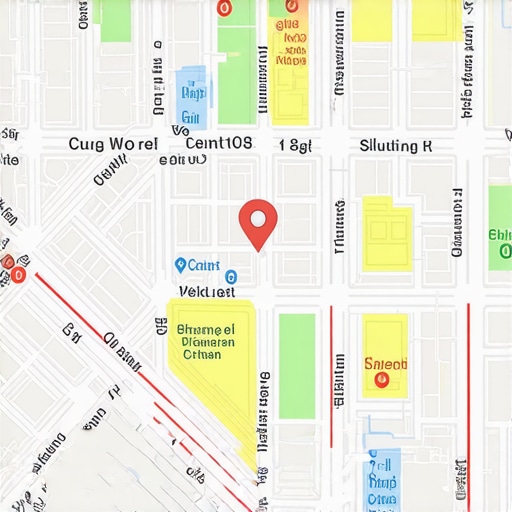
Google Business Profiles rely on precise spatial data where even a minor GPS pin misalignment triggers a ranking drop. A human local audit identifies these map errors and NAP inconsistencies that automated SEO tools miss, ensuring your business listing maintains high proximity salience and map visibility.
Software is excellent at crawling thousands of directories to see if your phone number matches, but it cannot tell you if your building is located in a “centroid dead zone.” I have seen businesses that appear perfectly optimized on a dashboard but are filtered out of the Map Pack because they are located 50 feet too far from the recognized commercial cluster of their city. This is the proximity paradox. A human auditor looks at the grid and understands that the algorithm is favoring a competitor not because they have more reviews, but because their physical entrance faces a primary artery while yours is tucked into a side alley. Tools to track and improve gmb rankings often provide a static score, but they fail to account for the physical reality of urban density. When you are finding local seo errors, you have to look for the subtle signals, like how a shared entryway with a virtual office might be poisoning your proximity score. The algorithm views a shared address as a high risk for spam, yet a standard GMB audit and ranking toolkit will simply tell you your address is verified. It won’t tell you that you are one algorithm refresh away from a hard suspension because you are categorized as a coworking space entity.
“Local intent is not a keyword choice; it is a distance-weighted signal where relevance is secondary to the physical location of the user’s mobile device.” – Map Search Fundamental
Why your physical address is a liability
A physical location can become a ranking anchor or a proximity filter trap depending on neighboring businesses and centroid theory logic. Software cannot verify if a virtual office or coworking space violates GBP terms of service, leading to sudden hard suspensions that require specialized reinstatement services or technical SEO interventions.
The current state of local search is increasingly adversarial. Google is using AI to detect patterns of “address renting” that automated tools simply cannot flag. If you are using tools for citation inconsistencies, you might think you are safe because your name and phone number are the same across the web. However, if that address has been used by six other businesses in the last five years, your “trust score” is bottoming out. This is where gmb profile reinstatement services become vital. A human expert can look at the history of a building and realize that the previous tenant left a digital footprint of spam that is now dragging your pin down. We often provide fixing map presence strategies that involve moving the pin ten feet to the left or right to clear a conflict with another business’s centroid. No automated tool is going to suggest moving a pin to avoid a proximity filter. They are designed to confirm data, not to navigate the spatial physics of the Map Pack. If your business is struggling, you might be dealing with a “location ghost” from a defunct business that still occupies the same latitudinal coordinates in Google’s cache. You need technical seo services to flush those old signals out and establish your own authority.
Local Authority Reading List
- 5 Map Pack Tactics to Push Your Pin Higher
- Recovering from a Hard Suspension
- The Audit Toolkit for Outranking Franchises
- Why Impressions Don’t Mean Calls
- The 10 Minute Profile Audit for Revenue Leaks
The three mile radius that determines your revenue
Map Pack rankings fluctuate based on the user’s precise latitude and longitude and the density of local competitors. Best GMB ranking tools provide grid data, but only a human interprets how service area polygons and local intent signals interact to drive actual store visits and lead generation.
I have analyzed thousands of competitor heatmaps, and the most striking takeaway is how fragile a ranking truly is. You can be number one on the street corner and number ten two blocks away. Automated tools to fix low gmb rankings often suggest more reviews or more keywords. This is a shallow approach. In reality, you might need to adjust your service area polygon because you are trying to compete in a neighborhood where you have zero historical “behavioral signals.” When a customer takes a photo at your store and uploads it, that photo contains metadata that confirms their location. Google weights these “real world” signals far more than a hundred fake reviews from a VPN. If you are struggling, you should look at why grid based ranking tools are necessary but insufficient. They show you where you are failing, but they don’t tell you that your competitor is winning because their customers are consistently checking in via the Google Maps app. This is the difference between digital data and spatial behavior. A human audit looks at the foot traffic patterns and suggests ways to trigger these signals. If your business is being ghosted, it might be because your technical SEO is failing. You may need fixing crawling issues to ensure Google connects your website’s local signals to your map pin. Without that connection, you are just a dot on a map with no authority.
“Proximity is the most powerful ranking factor in the local algorithm, yet it is the one business owners have the least control over without a sophisticated spatial strategy.” – Local Search Intelligence
The invisible wall of the proximity filter
A **proximity filter** occurs when Google suppresses similar businesses in the same building or block to provide variety to the user. Identifying this requires a **human audit** to analyze the **primary category** and **keyword stuffing** habits of neighbors that might be triggering a **local filter** on your profile.
Most business owners don’t realize they are being filtered out until they disappear entirely. This often happens when a new competitor moves into your office complex and uses the same primary category. Suddenly, Google decides only one of you can be in the top three. Automated tools will just show a drop in ranking. They won’t explain that you are being filtered because your “NAP” data is too similar to the guy next door. This is when you need reinstating your flagged profile experts who know how to differentiate your entity in the eyes of the algorithm. We use hidden schema fixes to give Google more data points about your unique services, helping you break through that invisible wall. It is also common for businesses to suffer from anchor text overload, where too many backlinks with the same local keyword make you look like a spammer. A human audit catches these over-optimization errors before they lead to a penalty. Software just keeps telling you to build more links. It doesn’t know when to stop. You have to understand the threshold of the neighborhood you are in. A small town in Iowa has different spam thresholds than a city block in Manhattan. Human audits respect those boundaries.
Why dashboards miss the storefront glitch
Dashboards rely on API data which is often delayed or sanitized by Google, hiding the technical SEO issues like broken redirects or indexing errors. A professional **GMB review and reputation management toolkit** combined with human oversight ensures that fake reviews or competitor sabotage are caught in real time.
I remember a case where a local cafe owner called me at midnight because a competitor had dropped twenty 1-star reviews in an hour using a VPN. The automated sentiment tools he used didn’t flag it as spam because the reviews were “vague” enough to bypass the basic filters. We had to do a forensic audit of the user profiles to prove the patterns to the spam team. If you are spotting fake reviews, you need to look at the history of the accounts, their local guide level, and their physical movement patterns. No tool can do this with 100 percent accuracy. Furthermore, many businesses lose ranking because of rank drops after website updates. An automated tool might see that your site is “up,” but it won’t notice that your new developer deleted the LocalBusiness schema or changed the canonical tags on your city pages. You need technical schema tweaks to keep the connection between your site and the Map Pack strong. If that bridge is broken, your pin will fall off the first page, and no amount of review chasing will bring it back. You have to fix the foundation, and that requires a human who knows how to read the code, not just a dashboard that shows a green light.
The logic of a verification loop
Google’s video verification and reinstatement loops are designed to weed out virtual offices and keyword stuffing, often requiring google business profile recovery services. Human experts navigate these manual reviews by providing the exact forensic documentation that the AI-driven support systems demand for a successful recovery.
The suspension of a profile is often a death sentence for a local business. I have seen companies wait six months for a response from Google support, only to get a generic “denied” email. This happens because they are trying to automate their appeal process. When you are recovering a suspended profile, you are actually speaking to a human reviewer who is looking for very specific things. They want to see a video of you unlocking the door to your office, showing your signage, and perhaps even showing a business license that matches the address exactly. If you have any keyword stuffing issues in your business name, you are automatically disqualified. An automated audit tool might suggest you add “best plumber” to your name because it helps you rank, but a human expert knows that this is a violation of terms that will get you banned. This is why you must know how to tell an expert from a scammer. An expert tells you what you can’t do, while a scammer tells you they have a “secret tool” that guarantees a rank. In the world of local search, there are no shortcuts. There is only proximity, trust, and the physical reality of the neighborhood block. You can’t fake a storefront, and you can’t automate a relationship with the algorithm. You have to earn it, one signal at a time. The street doesn’t lie, and neither does the math behind the Map Pack.