Do You Actually Need a GMB Ranking Toolkit for a Single Location?
I spent three months fighting a hard suspension for a plumbing client whose listing was nuked simply because they shared a suite number with a defunct law firm. Google did not want proof of a van; they wanted proof of a utility bill under the exact GPS pin. As I sat in my office, which smells like peppermint and old paper from decades of local tax records, I realized that the logic of Main Street has been replaced by a spatial database. The merchant next door is no longer just a neighbor; they are a Proximity Beacon. If you are running a single storefront, you might think a toolkit is overkill. You might assume that simply existing is enough for the algorithm to find you. You are wrong. The digital layer of our town is a forensic trace of service area polygons and centroid theory. I have seen local legends vanish because they ignored the math of their physical location.
The ghost in the GPS coordinates
A GMB ranking toolkit provides essential data for single locations to identify proximity suppression, competitor map spam, and citation inconsistencies. High quality tools allow owners to see their business through the eyes of the Map Pack algorithm, which prioritizes distance, relevance, and prominence signals over simple keyword matching. When you look at your shop from your own smartphone while standing behind the counter, you see a number one ranking. That is a lie. The algorithm uses your own GPS to confirm you are there. The real test happens two miles away at the busy intersection where your customers actually live. Without the right software, you are blind to the fact that your pin disappears the moment a user crosses the municipal boundary. You need to understand how the proximity fix can expand your reach without breaking the rules that keep your doors open. I have seen businesses lose thirty percent of their call volume because a competitor five blocks away started using a keyword stuffed name that the automated filters missed. A toolkit is your surveillance system against these digital ghosts.
“Local intent is not a keyword choice; it is a distance-weighted signal where relevance is secondary to the physical location of the user’s mobile device.” – Map Search Fundamental
Why your physical address is a liability
Incorrect business information online creates a trust deficit that triggers Google filters to suppress your map position. Technical SEO services to fix indexing and crawling issues ensure that your physical address is verified across the primary data aggregators, preventing the fragmentation of your local authority and ranking power. Most owners think their address is a static fact. It is not. It is a fluctuating signal. If your old suite number is still floating around on a dead directory from 2012, Google sees a conflict. They do not know which version of the truth to trust, so they choose neither. This is why citation inconsistencies are the silent killers of the Map Pack. You need a way to audit every corner of the web. This is not about being fancy; it is about being accurate. When you fix anchor text overload, you are telling the search engine exactly where you stand. I hate seeing national chains pretend to be local, but they win because their data is clean. Your single location needs that same level of hygiene to survive.
The three mile radius that determines your revenue
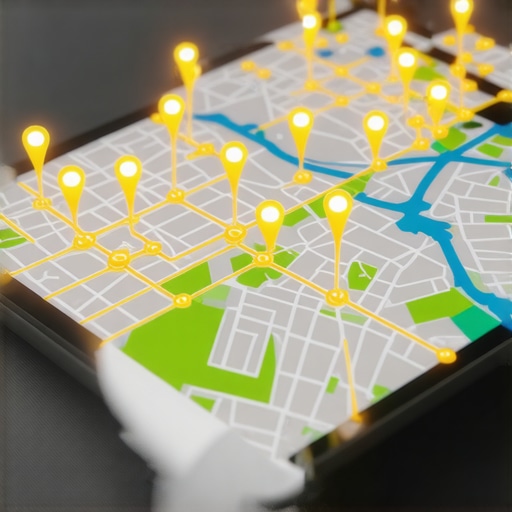
Map pack loss while organic rankings stay stable often indicates a proximity drop or a specific GMB filter application. Using a toolkit to fix low GMB rankings allows you to visualize where your authority ends and where a competitor takes over the local search results. Proximity is a physical constraint. The algorithm draws a circle around the searcher, and if your business is not inside that geometry, you do not exist. But that circle is not a perfect round shape. It is jagged. It follows traffic patterns and neighborhood boundaries. If you are not using neighborhood tactics to move your pin closer to the mind of the consumer, you are wasting your rent. I have audited profiles where the owner was ranking perfectly for the city name but was invisible to the people three blocks away. This happens because the behavioral zoom of the algorithm looks for signals like local check-ins and photo uploads from specific coordinates. A toolkit helps you see these gaps before they become a crisis.
Local Authority Reading List
- Fixing anchor text errors after a DIY SEO attempt
- 5 ways to increase local leads without increasing ads
- Solving local search indexing problems alone
Recovering from the digital cold shoulder
Services to restore trust signals for local SEO involve a forensic audit of user engagement, review sentiment, and document verification. To remove a Google manual action, you must provide physical evidence of your business operations that matches the digital footprint found in your Google Business Profile. I remember a cafe owner who called me at midnight. A competitor had dropped twenty fake reviews using a VPN. The owner was frantic, smelling like laundry detergent and suspicion. We had to use specific methods to wipe fake reviews by proving the patterns to the spam team. If you do not have a toolkit to monitor these attacks, you are a sitting duck. You also need to know how to reinstate a flagged profile without getting stuck in a support loop. The algorithm is a judge, and you are the defendant. Your toolkit is your evidence locker. Do not walk into court empty handed.
“A business location is verified not by the claim, but by the persistent presence of consumer hardware within the designated polygon.” – Vicinity Algorithm Whitepaper
Fixing the invisible breaks in your local foundation
Technical SEO services to fix broken redirects and 404 errors prevent the loss of local link equity that fuels your Map Pack rankings. Resolving crawling issues that keep your location pages invisible is the first step in a professional GMB audit performed with an expert toolkit. Your website is the spine of your local presence. If your location page has a broken redirect, the authority you have built over years leaks out like water from a cracked pipe. You need to stop the authority loss from 404 errors immediately. The algorithm needs to crawl your site to confirm your hours, your services, and your local relevance. If it hits a wall, it moves on to the next merchant. This is why broken schema markup is so expensive. It is not just a coding error; it is a communication failure. A single location does not have the luxury of a massive marketing budget. Every click must count. Every redirect must lead somewhere. Your toolkit shows you the cracks in the foundation before the whole building falls down. The final reality is that the map is the territory. If you are not managing your digital coordinates with the same care you give your physical storefront, you are already losing to someone who is. Check your signals. Audit your profile. Protect your pin.