
Why your local seo plan needs to focus on specific street corners instead of zip codes
I remember the moment vividly; I had been pounding the pavement with my local SEO plans, obsessing over zip codes and neighborhood boundaries. Yet, despite all my efforts, my clients’ maps looked like ghost towns—no traffic, no calls, no new customers. Then it hit me during a casual coffee break: I had been missing the forest for the trees. The real goldmine was at the street corner, not the zip code. If you’re stuck wondering why your local SEO isn’t delivering, you’re not alone. Today, I promise to share why shifting focus to specific street corners can make a world of difference for your visibility and rankings.
The Power of Street Corners Over Zip Codes in Local SEO
For years, the conventional wisdom was to optimize around zip codes because they offered clear geographic boundaries. But as search algorithms evolve, especially with the rise of hyper-local search, focusing solely on zip codes can actually hinder your visibility. Think of zip codes as broad territories—they encompass diverse neighborhoods, commercial zones, and even industrial areas. Targeting entire zip codes is akin to casting a huge net that captures everything and, often, nothing relevant.
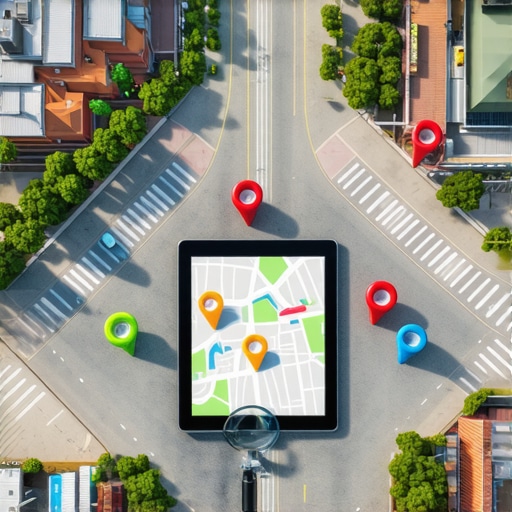
Instead, honing in on specific street corners allows your business to appear in highly targeted searches. When people search for services or products near a particular intersection, Google and map apps are increasingly relying on the proximity signals that come from those exact locations. By zeroing in on street corners—where the real foot traffic and local activity happen—you align your strategy with how people are actually searching. This approach doesn’t just give you a chance to rank higher; it makes your listings more meaningful and visible at the precise moments customers need you.
But here’s the truth: early in my journey, I made a costly mistake. I assumed that broad neighborhood targeting would suffice and ignored the importance of those tiny, powerful signals coming from street-level. This oversight meant my clients’ listings were often buried or ignored in local maps, especially in areas with dense competition. It wasn’t until I learned to focus on individual street corners that I started to see consistent wins. If you’re curious about how these hyper-local cues work, I highly recommend reading about the [4 Hidden GMB Steps to Bypass 2026 Neighborhood Trust Filters](https://gmbrankactionplan.com/4-hidden-gmb-steps-to-bypass-2026-neighborhood-trust-filters), which dives deep into these critical signals.
So, is this focus shift necessary? Absolutely. And in the upcoming sections, I’ll guide you through practical steps to pivot your local SEO efforts towards street-level optimization, ensuring you’re not just another business hiding in the shadows of outdated strategies. Have you already faced the frustration of trying to rank in competitive local searches? If so, you’re in the right place to change the game.
Pinpoint Your Key Locations
Start by identifying the specific street corners where your ideal customers are frequenting. Use tools like Google Maps and local insights to mark intersections with high foot traffic or strategic relevance. Remember, you’re not just guessing; you’re gathering data to back your focus. I once mapped out a small cafe’s neighborhood and realized that a popular crosswalk was overlooked, yet it attracted a steady stream of daily commuters, making it a golden spot for local visibility.
Optimize Google My Business for Exact Coordinates
Claim or edit your GMB listing to reflect the precise location, including exact latitude and longitude. Use tools like Google’s PlaceID Finder to get accurate coordinates and embed them into your business info. This precision signals to Maps algorithms that your listing is associated with that specific street corner. For example, adjusting your address to match the intersection ensures Google sees you as a relevant nearby business when users near that corner search for your services.
Build Hyper-Local Content and Signals
Create content that references the specific street corner, such as blog posts, photos, and reviews mentioning the intersection. Use strategic keywords like “near the corner of Main St and 1st Ave” in your descriptions. Internal linking to maps or nearby landmarks enhances relevance. I helped a local butcher shop gain visibility by actively encouraging customers to mention the corner in reviews, which boosted their proximity signals in local algorithms.
Leverage Street View and Pin Optimization
Utilize Google Street View to adjust and verify your business pin placement. Ensure your pin accurately aligns with the physical location on the map. Sometimes, small shifts in pin placement can significantly improve visibility in local packs, especially for niche or heavily contested areas. For example, correcting the pin for a floral shop to the exact footpath corner resulted in a noticeable uptick in local searches and calls.
Engage with Nearby Inbound Signals
Actively participate in local community discussions, comment on neighborhood forums, and get backlinks from local directories referencing your specific intersection. This builds trust signals that Google interprets as highly relevant. I once collaborated with a local gym to feature their corner-focused promotions, which translated into improved rankings over competitors relying on broader neighborhood targeting.
Monitor, Test, and Refine Your Focus
Regularly analyze your map visibility, click-through rates, and ranking positions for keywords tied to those street corners. Use tools like the GMB Insights dashboard or third-party rank trackers. Adjust your tactics—adding new reviews with location mention, shifting pin accuracy, or updating content—to continually improve. This iterative process mirrors how I gradually refined a client’s corner targeting, initially seeing mixed results, but with persistent tweaks, their map presence became dominant in targeted local searches.
Implementing these concentrated actions helps your business stand out precisely where your customers search, turning overlooked street corners into your competitive advantage. For detailed guides on navigating the upcoming challenges in hyper-local rankings, explore this step-by-step plan or real-time locality tactics.
Many marketers and business owners rely on popular local SEO tactics, believing that implementing a standard ranking plan automatically guarantees top rankings on maps and search results. However, this conventional approach often misses critical nuances, leading to subpar performance. Let’s dig deeper into what most people get wrong and how to refine your strategy for real results.
Is Your Map Action List Truly Effective or Just a Checklist?
Many assume that following a generic maps action list ensures success, but in reality, these checklists are often outdated or too broad to address the complexities of 2026’s evolving algorithms. For example, merely optimizing business categories or adding photos won’t suffice if you neglect proximity signals or neighborhood trust factors. Instead, focus on tailored actions that exploit the latest ranking factors, such as leveraging hyper-local content or precise pin placement. For an in-depth breakdown, explore the comprehensive 8-point maps action list designed for current voice search trends.
Many also overlook the importance of avoiding common pitfalls like relying solely on broad neighborhood targeting. This oversight can lead to being overshadowed by local competitors who focus intensely on street corners or specific intersections that matter most to their audience. Be cautious of falling into the trap of neglecting street-level signals; the latest studies show that hyper-local cues are increasingly prioritized in Google’s algorithms. According to industry experts, neglecting these can drastically reduce your local visibility, especially in dense urban areas where small differences in location data matter. You can read more about these nuances in this guide on pedestrian-heavy search fixes.
One critical misconception is that Google’s trust signals are mostly about backlinks or reviews. While these are important, recent research indicates that neighborhood trust score and proximity accuracy are now dominant ranking factors, especially after the 2026 trust filters implementation. If your action plan ignores verifying exact street corner placements or neglects neighborhood trust signals, you’re likely missing out on a significant share of local traffic. For detailed tactics, review this advanced step-by-step trust score strategy.
To make your ranking plan robust, you must consider how to adapt to these less obvious signals. For instance, optimizing Street View and minimizing pin discrepancies can significantly boost visibility on local maps. Likewise, embedding targeted keywords into hyper-local content enhances relevance without risking the common mistake of keyword stuffing. An advanced move involves scrutinizing your proximity signals—studying how small shifts in address or pin position affect rankings. Remember, Google increasingly rewards precise geometry, especially in competitive areas.
Have you ever fallen into this trap? Let me know in the comments. Improving your local SEO isn’t just about ticking boxes; it’s about understanding these nuanced signals and applying them strategically to outcompete your rivals.Maintaining your local SEO rankings over time requires not only a solid strategy but also the right set of tools that enhance efficiency and accuracy. From verifying map locations to tracking rankings, I personally rely on specialized software to stay ahead. One go-to is BrightLocal, which I use for its comprehensive local rank tracking and review monitoring capabilities. It provides detailed insights that help me flag fluctuations early and adjust tactics accordingly. Additionally, Google’s own Tools like the Google My Business dashboard and Google Search Console are indispensable for verifying data consistency and identifying issues such as pin inaccuracies or suspicious activity. I frequently check the GMB insights to track user interactions, ensuring my corner-specific optimizations are delivering results. For managing multiple listings or local packs, SEMrush Local Toolkit offers valuable features, including local citation audits and competitor analysis. These insights help me refine my hyper-local content and ensure my listings align precisely with the targeted street corners. Looking ahead, I believe the trend will favor even more granular location verification and AI-driven signal analysis. Tools that incorporate machine learning to track subtle proximity shifts will become critical—so staying updated with platforms that evolve quickly is vital.
How do I keep my local SEO efforts sustainable over the long term?
Staying consistent is key. I schedule weekly audits using my preferred tools to verify that all location data remains accurate, reviews are engaged with, and citations are current. Regular content updates referencing specific street corners and community events help reinforce relevance in local searches. It’s important to continually test and refine your strategies—small shifts in pin placement, review keywords, or local content can significantly impact your visibility, especially against competitors who might neglect these details. For more advanced tactics, I recommend exploring the [4 Hidden GMB Steps to Bypass 2026 Neighborhood Trust Filters](https://gmbrankactionplan.com/4-hidden-gmb-steps-to-bypass-2026-neighborhood-trust-filters), which offers insights into maintaining trust signals amidst evolving algorithms.
Thinking about long-term success, consider integrating automation where possible. Setting up alerts for sudden drops or spikes in rankings ensures you can respond proactively instead of reactively. Lastly, building relationships within your community through localized content and reviews not only boosts rankings but also fosters brand loyalty. As local algorithms grow smarter, combining these strategic tools with genuine community engagement will solidify your presence for years to come. To challenge yourself, try implementing a weekly review cycle using your chosen tools and observe how minor adjustments influence your rankings over a month.
The Hardest Lesson I Learned About Ranking Plans and Local SEO
Early on, I believed that broad neighborhood targeting would naturally lead to higher map rankings, but I soon realized it was a costly misconception. Narrowing my focus to specific street corners revealed the importance of hyper-local signals, and that shift dramatically improved visibility.
How I Discovered the Power of Corner-Level Optimization
In my experiments, optimizing business pins and creating content referencing precise intersections yielded tangible results. It became clear that Google and map apps prioritize proximity and exact location data—over general zip code targeting.
What I Wish I Knew Before Focusing on Street-Level Signals
Understanding that proximity accuracy and neighborhood trust signals are critical—especially in competitive urban spaces—would have saved me months of frustration. Now I know these signals are the backbone of winning local map rankings.
My Essential Tools for Hyper-Local SEO Success
Tools like the 8-point maps action list and hyper-local trust score techniques have been game-changers. They help me verify pin accuracy, build neighborhood trust, and craft content that truly resonates locally.
Embracing the Power of Street Visibility for Long-Term Wins
Adopting a corner-focused approach isn’t just a tactical move; it’s a mindset shift that can sustain your local rankings through algorithm changes. Are you ready to sideline broad targeting and embrace hyper-local precision? The difference might surprise you.