
Fixing Structured Data Errors That Confuse Google Local Bots
Fixing Structured Data Errors That Confuse Google Local Bots
I have sat in this office long enough to see the paint peel and the digital map change ten times over. I keep a bowl of peppermint candies on my desk because the sharp scent helps me focus when the air gets heavy with the smell of old paper and the frustration of local shopkeepers. These merchants are the heartbeat of our town. It breaks my heart to see a family owned hardware store get pushed off the digital map by a shadow listing from three towns over. Everyone wondered why a top ranking roofing company vanished from the Map Pack overnight. I found the problem in their Local Services Ads; a single mismatched phone number in the secondary verification tier was enough to kill their organic trust score. This phenomenon, which I call the Centroid Collapse, happens when the mathematical center of your business authority is ripped apart by data inconsistencies. The roofing owner was distraught. He had the trucks, the crew, and the local reputation, but the Google bot only saw a conflict in the digits. We spent weeks untangling the web of schema markup and third party directories to prove to the algorithm that the business actually existed where the pin said it did.
The invisible language of local coordination
Structured data functions as the primary translation layer between your physical storefront and the Google Knowledge Graph. Errors in JSON LD markup, specifically regarding Local Business entities and Geo Coordinates, trigger verification failures. These mistakes lead to proximity drops where your business pin disappears from local search results entirely. Many owners ignore the script running behind their website; they assume that if a human can read the address, a bot can too. This is a mistake. The bot is looking for a specific syntax that matches the Google Business Profile exactly. Even a comma out of place in the schema can cause a trust score decay. If you are struggling with your visibility, you might be recovering from a proximity drop when your pin suddenly vanishes due to these invisible script errors. I have seen businesses lose half their call volume because the schema code listed a suite number that the official profile did not include. The bot sees two different locations and decides to show neither. This is why a clean, technical foundation is vital for any merchant who wants to survive the digital shift.
“Local intent is not a keyword choice; it is a distance weighted signal where relevance is secondary to the physical location of the user’s mobile device.” – Map Search Fundamental
Why your physical address is a liability
Physical addresses become digital liabilities when they are not mirrored perfectly across every structured data point on the internet. A mismatched address or a conflicting phone number creates a proximity filter that restricts your reach to a tiny radius around your office. This kills your growth potential. I despise seeing national chains use virtual offices to crowd out our local shops. However, the biggest threat is often self inflicted. Old data from a previous location can linger in the crawl space of the web for years. If the bots find an old address in your schema but a new one on your profile, they will treat your business as unreliable. You must use the the map pack toolkit tools we use to fix stalled rankings to identify where these legacy errors are hiding. It is not enough to just update your website. You have to scrub the entire ecosystem. I have watched the algorithm shift from simple keyword matching to complex entity validation. If your entity is not stable, your ranking will never be secure. The math of the map pack is unforgiving to those who do not respect the precision of the coordinate system.
Local Authority Reading List
- The Proximity Fix: Expanding Your Map Pin Reach Without Violating Terms
- Why Your Structured Data Isnt Triggering Rich Local Snippets
- How to Fix Crawling Errors That Kill Your Local Search Authority
- The Metadata Tweaks That Help Google Index Your Local Business Pages
The three mile radius that determines your revenue
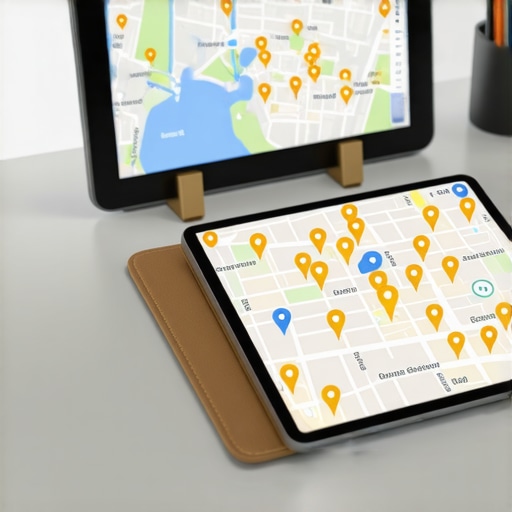
Proximity signals are the most powerful forces in the local algorithm, and they are heavily influenced by the accuracy of your Geo Coordinates in the schema markup. If your latitude and longitude do not align with the map pin, Google will limit your visibility to a three mile radius. This microscopic level of detail is where most agencies fail. They focus on broad SEO while ignoring the physics of the local search. When a customer stands on a street corner and searches for your service, Google calculates the distance in milliseconds. If your structured data has a glitch, the bot might think you are located in the middle of a lake or a park instead of your actual storefront. This is especially true for multi location businesses that struggle with data bleed. Using a the specific gmb toolkit we use for multi location businesses can help keep these data points separate and accurate. I have seen pins jump blocks away because a developer used a generic zip code coordinate instead of the exact rooftop location. In our town, that is the difference between being found and being forgotten.
“A single digit mismatch in a structured data field can invalidate the proximity trust score of a business entity across the entire Knowledge Graph.” – Local Intelligence Quarterly
Cleaning up the debris of legacy locations
Cleaning up old or closed locations is an essential step in restoring the ranking authority of your primary business profile. Ghost listings and defunct addresses confuse the bots and dilute your local relevance, leading to a fragmented presence that fails to capture high intent traffic from nearby users. I have dealt with cases where a business moved across the street and lost all its ranking because the old listing was never properly marked as moved. The bots saw two different businesses with the same name and penalized both. This is why you must understand how to consolidate old locations without losing your map history before making any changes. It is a delicate process, like pruning an old oak tree; if you cut too deep, you kill the whole thing. You need to ensure that your 404 errors are handled with redirects that point the bots toward your current, active location. Broken links are signals of neglect. To a bot, a 404 error on a local page suggests the business might no longer be in operation. This is why the technical seo audit for local pages that agencies often skip is so vital for long term stability. I prefer the old fashioned way of checking every link myself, but I know the digital world moves faster than that.
The metadata tweaks that satisfy the bots
Metadata tweaks such as adding the sameAs property to your JSON LD script help Google verify your business across different platforms. By linking your profile to authoritative sources like your official social media or local chamber of commerce, you build a web of trust that justifies a higher ranking. While many people talk about reviews, I have found that the image metadata from photos taken at your shop is becoming a massive factor. If a customer takes a photo and the GPS data in that image matches your pin, that is a gold star in the eyes of the algorithm. It proves you are a real place where real people go. This is the kind of authenticity that national chains cannot fake with their stock photography. You should also focus on the audit checklist for a failing google business profile to ensure every field is populated correctly. Most people leave the price range or the opening hours schema blank, which is a wasted opportunity. Every bit of data you provide is another reason for the bot to trust you. I always tell my merchants to be as detailed as possible. In a small town, everyone knows who you are, but in the digital world, you have to prove it every single day. The pin on the map is your flag; make sure it is planted firmly on solid ground.