How to Increase Map Leads Using Specific Hyperlocal Service Pages
I spent three months fighting a hard suspension for a plumbing client whose listing was nuked simply because they shared a suite number with a defunct law firm. Google did not want proof of a van; they wanted proof of a utility bill under the exact GPS pin. The investigator on the other end of the ticket saw a pixel mismatch in the photo metadata. It was cold, clinical, and efficient. It felt like standing on wet concrete in a rainstorm while trying to argue with a machine that does not believe you exist. That experience taught me that the map pack is not about your business name. It is about spatial mathematical proof. If your data has a glitch, your revenue dies. If your coordinates do not align with the behavioral footprint of your customers, the algorithm ignores you. I have seen businesses disappear because of a single mismatched phone number in a secondary verification tier. This is the world of the proximity engineer. We do not just build pages; we calibrate beacons in a three dimensional spatial database.
The ghost in the GPS coordinates
Hyperlocal service pages act as proximity anchors that validate Google Business Profile locations by providing entities, GPS coordinates, and neighborhood signals to the local search algorithm. These pages function as the bridge between the digital map pin and the physical reality of a service area. By creating specific neighborhood landing pages, you overcome the proximity paradox where Google limits your reach to a tight radius around your office. Most business owners fail because they treat their website as a static brochure. In the hyper-local layer, your website is a validation engine. It exists to prove to the algorithm that you are not just a point on a map, but a functional part of a community. When you are fighting through the manual review process, these pages serve as your evidentiary record. The algorithm looks for consistency across the entire web. If your site mentions a suburb but your GMB does not, the trust score drops. I have walked the streets and seen how the map data changes block by block. A listing that ranks at the corner of Main and First might vanish by the time you walk to Main and Third. This is why understanding the proximity paradox is the first step to scaling map leads.
Why your physical address is a liability
Business addresses that share commercial suites or utilize virtual offices often trigger hard suspensions and proximity filters because the local algorithm prioritizes unique physical storefronts. If your address is flagged for suspicious activity, your entire search presence can collapse overnight. This happens because Google hates address rentals and fake directory listings. They want to see a physical footprint. I remember a case where a dentist lost all their patients to a competitor two miles further away simply because their schema was broken. They had lost their neighborhood authority due to a technical error in their coordinate mapping. To fix this, you must stop relying on national backlinks. You need local mentions. You need signals that come from the same zip code. This is where signal stacking becomes mandatory. You are essentially building a digital fortress around your physical pin. If you do not have a physical office, you must learn how to signal local authority through service area polygons and high precision hyperlocal content. The algorithm is not looking for the best plumber. It is looking for the plumber who is closest to the user and has the most verified neighborhood data.
“Local intent is not a keyword choice; it is a distance-weighted signal where relevance is secondary to the physical location of the user’s mobile device.” – Map Search Fundamental
The digital lens of the map pack
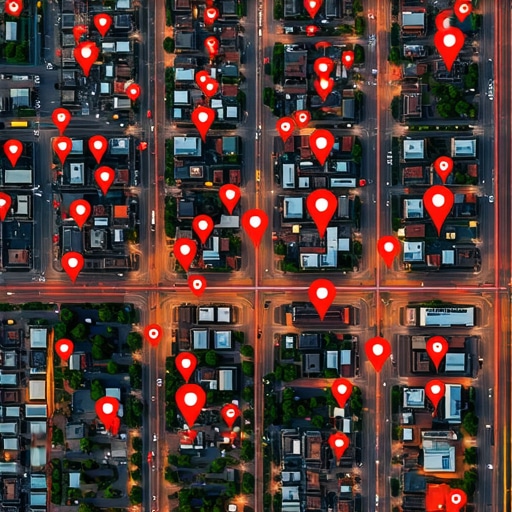
Top google business profile seo toolkits and local ranking tools allow you to audit proximity gaps, track map pack positions, and monitor competitor review velocity across specific neighborhoods. Using a grid based ranking tool is the only way to see the truth. Standard trackers give you a single number for a whole city. That is a lie. You might be number one at your office and number twenty at the park across the street. We use hyperlocal tracking to find the exact spots where our pin falls off the first page. Once we find a gap, we deploy a specific page for that intersection. It is tactical. It is precise. Many owners are getting false positives on map proximity because they use the wrong software. You need tools that show real neighborhood positions. When you see the red dots on the grid, you know exactly where to focus your marketing. This is how we analyze competitor heatmaps to find ranking gaps. We do not guess. we measure the spatial decay of the ranking signal. If the signal dies at the railway tracks, we need a page about the neighborhood on the other side of the tracks.
How hyper local content fixes ranking gaps
Specific hyperlocal service pages solve map coverage gaps by using neighborhood specific keywords, local landmarks, and service area identifiers to expand the ranking radius of a Google Business Profile. This is not about keyword stuffing. It is about relevance. If you want to rank in a specific block, you should mention the local park, the major intersection, and the neighborhood history. We call this the hyperlocal content trick. It forces the search engine to associate your business with that specific geography. I have seen pest control companies dominate entire counties using this method. They do not just have a “service” page. They have a page for every tiny village. This is how you expand your business pin radius without breaking the rules. You are providing information gain. You are telling Google something the competitor isn’t. When the AI Overview scans the web for the best local option, it sees your deep neighborhood data and cites you as the authority. You become the primary source for that location.
Local Authority Reading List
- The Toolkit for Map Pack Dominance
- The Fast Track to Profile Reinstatement
- Neighborhood Tactics for Pin Movement
- The Value of a Human Local Audit
Technical fixes for the map-spam era
Services to fix soft 404 and duplicate content issues ensure that local landing pages are indexed correctly and do not dilute the authority of your main location profile. If your site is messy, your rankings will drop. Google hates broken redirects. I have seen dozens of sites where redirect loops drain local link equity until the map pin vanishes. You need to fix indexing issues that keep your pages invisible. If a page is not in the index, it does not exist for the map algorithm. You must also fix crawling errors immediately. A single 404 on a location page can signal to Google that the physical business is closed. We often see businesses drop in rank after a website update because they forgot to migrate their local schema. This is why schema markup errors confuse the maps algorithm. It needs clear, structured data to understand where you are. If your website says one thing and your JSON-LD says another, you will lose. We use a gmb review and reputation management toolkit to make sure the user sentiment matches the technical health of the site.
“Proximity is a dynamic variable. The search engine calculates the physical distance between the user and the merchant at the millisecond of the query.” – Location Intelligence Whitepaper 2025
The three mile radius that determines your revenue
Local SEO tools to optimize google business profile listings focus on improving proximity signals, increasing review velocity, and fixing citation inconsistencies to rank in the top 3 spots. Most businesses live or die within a three mile radius. Beyond that, the conversion rate drops. This is why high impressions do not always mean more phone calls. You might be showing up to people who are too far away to drive to you. You need keywords that drive real store visits. We look for behavioral data. We want to know which intersections produce the most calls. Then we use tactics to turn profile views into visits. This includes using customer photos. In 2026, image metadata is more powerful than text. If a customer takes a photo at your shop, the GPS coordinates in that photo are a massive trust signal. It proves foot traffic. It is harder to fake than a citation. That is why physical foot traffic matters more than digital citations now. We encourage customers to upload photos directly from their phones. It creates a forensic trace of authenticity that the spam investigators cannot ignore.
The forensic audit of local signals
Best local seo tools for google business profile provide real time neighborhood data, audit competitor reviews, and identify messy business citations that are quietly killing your local ranking. You need to be a detective. You must spot fake reviews on your rivals and report them. I have seen companies use VPNs to drop twenty 1-star reviews in an hour. We had to perform a forensic audit of those profiles to prove the pattern to the spam team. It is a war. You need to fix messy citations yourself because many agencies just use automated tools that miss the details. Automated tools cannot see the nuance of a misspelled street name. They cannot feel the frustration of a video verification nightmare. You have to do the work. Use a practical checklist for map visibility and go through it line by line. Check every phone number. Check every suite. Check every photo. The small things are what move the pin. If you find a permanently closed map listing error, do not wait for support. Fix the underlying data sources first. This is how you reclaim your spot on the first page.