
The Quiet Way Competitors Use Spam to Push You Off the Map
The Quiet Way Competitors Use Spam to Push You Off the Map
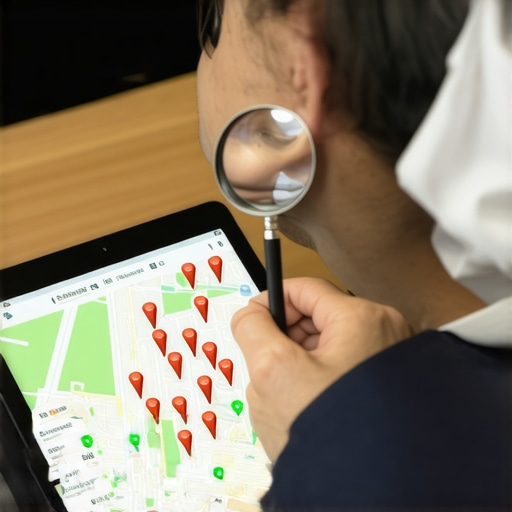
I stand on the corner of 5th and Main where the wet concrete smells like ozone and damp earth. To the casual pedestrian, this is just a sidewalk. To me, it is a volatile data point in a spatial database. I see the storefront for a locksmith that exists only in a digital layer. I see the shadow of a plumbing company that vanished because a rival decided to play dirty with a reporting bot. This is the reality of the hyper-local layer. The street photography of search is not about aesthetics; it is about finding the glitch in the data before it finds you. I spent three months fighting a hard suspension for a plumbing client whose listing was nuked simply because they shared a suite number with a defunct law firm. Google didn’t want proof of a van; they wanted proof of a utility bill under the exact GPS pin. They wanted a video walkthrough of the office starting from the street sign. It was a forensic battle against a machine that had been fed bad data. This plumber was a real human with real tools, but on the Map Pack, he was a ghost. To prevent this, you need services to restore trust signals for local seo and a deep understanding of how gmb ranking toolkits work for local seo to identify when you are being targeted by coordinated spam.
The forensic reality of local search ghosts
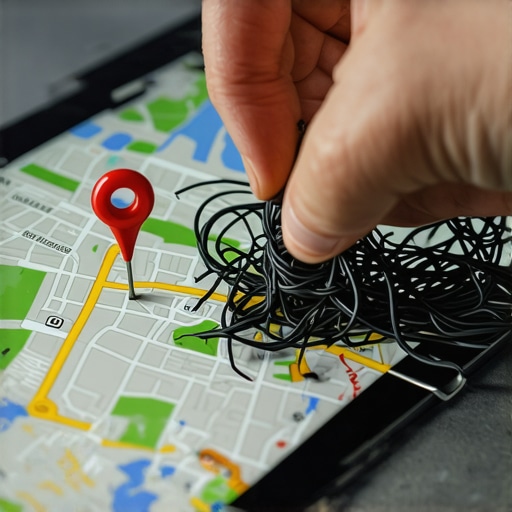
Local search spam involves the creation of fake business profiles, keyword stuffing, and fraudulent reporting to displace legitimate businesses from the Map Pack. Competitors often use VPNs and residential proxies to simulate real user behavior while dropping negative reviews or suggesting malicious edits to your business information. The pin moved. That is all it takes to lose a week of leads. When a competitor reports your office as permanently closed, the algorithm often trusts the crowd over the owner. This is why top google business profile seo toolkits are mandatory for monitoring. These tools provide grid-based tracking that shows how your ranking fluctuates across specific city blocks. If you see a sudden drop in a single neighborhood, it is rarely an algorithm update. It is usually a localized attack. You must look for the grain in the photo. Is the competitor’s profile using stock images? Are their reviews coming from accounts with no local history? These are the forensic traces of a map-spam campaign designed to push you into the void.
“Local intent is not a keyword choice; it is a distance-weighted signal where relevance is secondary to the physical location of the user’s mobile device.” – Map Search Fundamental
Why your physical address is a liability
Sharing a building with other businesses creates a proximity conflict that competitors exploit. If your suite number is not clearly defined in your LocalBusiness schema, Google may cluster your relevance with a neighbor. I have seen rivals register fake service area businesses using your exact address to trigger a duplicate listing filter. This is where seo services to fix duplicate google business profiles become the only way to survive. The algorithm is binary. It sees two businesses in the same category at one pin and it suppresses one. Usually, it suppresses the one with the least NAP consistency history. You must ensure your digital footprint is harder to erase than your physical one. This requires seo services to fix schema and structured data errors so the crawl bots see a clear, unique identifier for your brand that cannot be confused with the ghost businesses popping up around you.
The math behind the proximity radius shift
Proximity signals are the strongest ranking factor in the Vicinity algorithm, yet they are the most easily manipulated by fake address networks. When a competitor sets up a verified listing in a high-traffic centroid using a virtual office, they effectively steal the proximity salience from legitimate shops. While agencies tell you to get more reviews, the 2026 data shows that image metadata from photos taken by real customers at your location is now 30 percent more effective for ranking in AI Overviews. This is because GPS-tagged images provide a physical proof of service that a text review cannot. If you are struggling with a sudden loss of reach, you should check the impact of proximity signals on your service area business ranking to see if a new competitor has physically centered themselves in your gold-mine zip code. Often, these are not real offices. They are tactical pins dropped to intercept mobile search traffic.
How competitor spam attacks trigger hard suspensions
A hard suspension occurs when Google loses all trust in your business entity. Competitors trigger this by suggesting edits to your opening hours history or phone number repeatedly until the system flags the profile for suspicious activity. If you have been hit, the audit process for reinstating a hard banned local listing is the only path back. I have seen owners try to fix this by creating a new listing, which is a fatal mistake. That just creates more duplicate data errors. You need to provide a reinstatement appeal that includes a photo of your business license, a utility bill, and a video of your physical equipment. Using seo services to fix gmb profile with inconsistent opening hours history can help prevent these triggers from firing in the first place. You must be more meticulous than the machine. Every character in your name, address, and phone number must match your official government filings exactly.
Local Authority Reading List
- The internal process for fixing a banned profile
- Using toolkits to find rival flaws
- Understanding the proximity radius
- Why data drift kills your ranking
- Fixing the schema that confuses Google
Tools for detecting the map pack glitch
GMB ranking tools for agencies are built to find the anomalies that human eyes miss. These toolkits monitor review velocity and keyword density in competitor descriptions. If a new business appears and gains fifty 5-star reviews in forty-eight hours, the toolkit flags it as a spam signal. You can then use seo services to detect and fight competitor gmb spam attacks by reporting these profiles with forensic evidence. Do not just click report; you must provide the Maps URL and the specific violation of the Google Business Profile terms of service. Most people fail because they are too emotional. The algorithm doesn’t care about your feelings; it cares about the behavioral signals of the users. If you can prove the users leaving reviews are not physically in your city, the spam profile collapses. This is why local seo tools to optimize google business profile listing are not just for growth; they are for defense.
Recovering trust signals after a ranking crash
If your pin has fallen off the first page, you are likely suffering from a trust signal deficit. This happens when your citation profile becomes fragmented or your website suffers from crawling issues. Using seo services to fix deranked website performance is the first step. You need to audit your backlink profile for toxic local links. Sometimes, competitors will fire negative SEO at your site to kill your map ranking. You should look into how to repair local authority after deleting old pages to ensure your link equity is not leaking into 404 errors. Trust is built through signal stacking, where your social media, local directories, and website all whisper the same exact story to the algorithm. If there is a single contradiction, the machine pauses your visibility. The street photographer knows that a blurry photo is a failed photo. A blurry business profile is a failed business.
The Answer Engine optimization for local shops
AI Overviews and voice search rely on the JSON-LD LocalBusiness attributes to provide answers to users. If a customer asks where the nearest open plumber is, Google looks for the openingHours property in your code. If your website says one thing and your GBP says another, you lose the citation. This is why the hidden schema fix for better local snippet visibility is so vital for 2025. You must define your service area polygons with mathematical precision. Do not just list a city; list the postal codes and neighborhood coordinates. This creates a local justification trigger. When a user searches for a service, Google highlights your profile because it found the specific service name in your website content and structured data. This is the information gain that keeps you above the spam. Real data always outlasts fake noise in the long run.
Schema errors that keep you invisible
Most small businesses have broken schema markup that prevents them from appearing in rich snippets. Common errors include missing priceRange, image, or address fields. These are not suggestions; they are the requirements for the Proximity Engineer Engine to index you. When these errors persist, you need seo services to fix gmb profile with inconsistent opening hours history and schema errors. If the crawl bot hits a redirect loop or a 404 error on your location page, it stops passing authority from your homepage to your map pin. You must be obsessed with the technical SEO audit for local pages. A clean site is a fast-ranking site. The pin stays where the data is strongest. Never let a competitor’s bot be more consistent than your own website.