
Why High Impressions Don’t Always Mean More Phone Calls to Your Shop
Why High Impressions Don’t Always Mean More Phone Calls to Your Shop
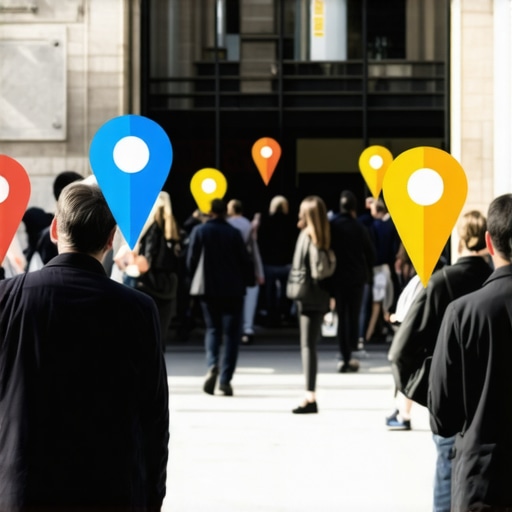
As a local business owner, there is a specific kind of frustration that comes from looking at your Google Business Profile dashboard and seeing a massive spike in impressions, only to look at your desk and see a phone that isn’t ringing. In my years as a local SEO consultant, I have seen this “Impression Gap” sink more marketing budgets than almost any other technical error. We celebrate the “views” because they feel like progress. They look like growth on a chart. But let’s be clear: impressions are a vanity metric if they do not result in a conversion. In the world of google business profile seo, visibility is merely the invitation; the conversion is the party.
The “Impression Gap” is the distance between being seen and being chosen. According to 2026 benchmarks, the average local business sees about 59 actions per month – actions like website clicks, direction requests, or phone calls. However, thousands of businesses are currently being “ghosted” by potential customers despite having high visibility. If your profile is appearing in the Map Pack but your lead volume is stagnant, you aren’t suffering from a lack of reach; you are suffering from a lack of relevance and trust. You are being seen by the wrong people, at the wrong time, or with the wrong message. Bridging this gap requires moving beyond basic ranking tactics and understanding the psychology of the local searcher.
[The Impression Gap: Why Competitors With Fewer Reviews Are Still Outranking You]
The Vanity Metric Trap: Understanding Impressions vs. Intent
To fix the lack of calls, we first have to deconstruct what an “impression” actually is. Google counts an impression whenever your business profile appears on a user’s screen, whether they were looking for you specifically or just browsing a broad category. This leads many business owners into the vanity metric trap. There is a massive difference between “Discovery” searches and “Direct” searches, and even within discovery, there is a spectrum of intent.
When you appear for broad, low-intent keywords, your impressions skyrocket. For example, if you are a personal injury lawyer and you rank for the term “lawyer,” you will get thousands of views. But many of those users might be looking for a divorce attorney, a criminal defense lawyer, or even just information on how to become a lawyer. These are what I call “low-intent views.” They inflate your stats but will never result in a phone call because you don’t offer what the user actually needs at that moment. Effective google business profile seo isn’t about getting the most views; it’s about getting the most qualified views. If your profile is optimized for broad terms rather than specific, high-intent services, you are essentially paying for billboard space in a city where no one drives your type of car.
We see this frequently when businesses focus solely on high-volume keywords rather than conversion-centric ones. A “Direct” search – where someone types your business name – has a near 100% intent rate. A “Discovery” search for “emergency plumber near me” has high intent. A discovery search for “how to fix a leaky faucet” has almost zero intent for a service call. If your profile is appearing for the latter, your impressions will be high, but your phone will remain silent. You must align your profile with the specific problems your customers are trying to solve in real-time.
[Why Topping the Map Pack Isn’t Driving Customers to Your Front Door]
Why Your Profile Gets Seen But Doesn’t Convert
If you have confirmed that you are appearing for the right keywords but still aren’t seeing calls, the problem lies in your “Trust Signals.” In the split second a user spends looking at the Map Pack, they are performing a rapid-fire audit of your credibility. If any single signal is weak, they will skip right over you to the next listing. This is why visibility alone is a failing strategy.
The first and most obvious factor is the Review Factor. But it isn’t just about having a 4.8-star rating. In 2026, users are more sophisticated; they look at review velocity (how often you get new reviews) and recency. If your last review was from six months ago, a potential customer assumes your service has declined or you are no longer in business. A listing with 50 reviews, five of which came in the last week, will often out-convert a listing with 500 reviews where the most recent is from last year. You need a constant stream of fresh social proof to bridge the impression gap.
The Visual Factor is the next hurdle. Many businesses use blurry, low-resolution photos or, even worse, generic stock photos. Research shows that authentic “behind the scenes” shots – photos of your team in action, your actual office interior, and your branded vehicles – perform significantly better than polished professional photography that looks like it was plucked from a database. Users want to see who is going to show up at their door. If your photos are uninviting or look fake, the user’s brain registers a “threat” or “uncertainty” signal, and they move on.
Finally, there is the Description Factor. Most business descriptions are weak and generic, focusing on how long the company has been in business rather than how they solve the customer’s immediate problem. Your description should be a direct answer to the user’s “Why should I call you?” question. Remember, mobile users are 2.3× more likely to call than desktop users. When someone is on their phone, they are often in “solution mode.” If your mobile “Call” button is the only thing they see, it must be backed by an immediate sense of trust generated by your reviews, photos, and description. If those elements aren’t aligned, the impression is wasted.
[4 Review Habits That Push Your Business Above Higher-Rated Rivals]
The Technical Friction: Why the “Call” Button Stays Unclicked
Sometimes the gap between impressions and calls isn’t about psychology; it’s about simple technical friction. If Google provides a “Call” button that leads to a disconnected number or a confusing automated menu, that customer is gone forever. I often see profiles where the “Closed” status is active during times when the business is actually open. This usually happens because the owner forgot to update holiday hours or special seasonal shifts. If a user sees “Closed” in red text on your profile, they won’t even bother looking at your reviews.
Another major source of friction is the lack of a comprehensive “Services” list. Google has moved heavily toward “Entity and Geographic Relevance.” This is a concept I frequently advocate for: ensuring that Google understands exactly what your “entity” (your business) does and where it does it. If you are a landscaping company but haven’t explicitly listed “paver installation” or “irrigation repair” in your services section, Google might show you for “landscaper,” but the user looking for “sprinkler repair” won’t see the specific keyword they need on your profile to feel confident in calling you. Using local seo software to audit these gaps is essential for maintaining a high conversion rate.
Furthermore, if your website link is broken or leads to a non-mobile-friendly page, you lose the 42% of users who want to do a “deep dive” before calling. Every click that doesn’t lead to a clear answer is a point of friction. My approach to reinforcing entity and geographic relevance involves making sure every technical field in the Google Business Profile is not just filled out, but optimized with the specific language your customers use when they are ready to buy. When the technical details are perfect, you remove the barriers that keep the “Call” button from being clicked.
[5 Profile Errors That Trigger the Google Proximity Filter]
The Proximity Paradox and the 2026 Density Filter
In the past, being the closest business to the searcher was almost a guarantee of getting the call. We call this proximity. However, we are now dealing with the “Proximity Paradox.” Being close isn’t enough anymore because Google has implemented what we call the “Density Filter.” In 2026, if there are multiple businesses of the same category in a tight geographic radius, Google will often “clip” or hide listings that it deems redundant or less relevant, even if they are physically closer to the user.
This means you could be getting impressions when the map is zoomed out, but when a user narrows their search, you disappear. To break out of this shrinking map radius, you must focus on hyperlocal content. This involves creating Google Business Profile posts and website content that mention specific neighborhoods, landmarks, and local events. By doing this, you signal to Google that your “geographic relevance” extends beyond just your front door. You are telling the algorithm that you are the preferred choice for this specific sub-section of the city.
If you don’t use a google maps rank tracker to see how your visibility changes from block to block, you might think you have great coverage when you actually only have a “thin” presence that disappears under the pressure of the Density Filter. Breaking the filter requires more than just a verified address; it requires an active, data-rich profile that proves you are more relevant than the competitor three doors down.
[This 2026 Local SEO Plan Solves Neighborhood Map Clipping]
Benchmarking Success: What a “Good” Conversion Rate Looks Like
To know if you are failing, you have to know what “success” looks like. Many business owners have unrealistic expectations of their GBP data. Based on current research, 53% of users who find a local business via search end up visiting or calling that business within 24 hours. This is a staggering number, but it also means that if your calls aren’t coming in, you are losing more than half of your potential market every single day.
Another critical stat is that 42% of local search conversions now happen entirely on the Google Business Profile. This means the user never even visits your website. They see your profile, read your reviews, check your photos, and hit “Call.” If you are putting all your effort into google business profile optimization for the sake of driving website traffic, you are missing the point. Your GBP is your new homepage. It is the destination, not just a signpost. If your “actions” (calls, directions, messages) are less than 2-3% of your total impressions, you likely have a conversion issue. If they are higher than 5%, you are doing excellently. Understanding these benchmarks allows you to stop chasing vanity metrics and start focusing on the KPIs that actually impact your bank account.
The 5-Step Action Plan to Turn Impressions into Inquiries
If you’re ready to bridge the Impression Gap and start seeing a return on your google business profile seo efforts, follow this tactical checklist. These are the exact steps we use to force a profile to not just show up, but to dominate the conversion space.
- Audit Primary and Secondary Categories: Ensure your primary category is your most profitable service, not your broadest one. If you’re a “Plumber,” but you make your best margins on “Water Heater Repair,” make sure your secondary categories and services reflect that specificity. Don’t be so broad that you attract “window shoppers.”
- Update the “Services” Section: Do not rely on Google’s default descriptions. Manually add every service you offer and write a 100-word description for each, using high-intent keywords. This reinforces your “entity” and helps you show up for “long-tail” searches that have higher conversion rates.
- Implement a Review Velocity Strategy: Don’t just wait for reviews. Use a system to ask every customer for feedback immediately after service. Aim for at least 2-3 new reviews per week to keep your “recency” signal strong.
- Use GBP Posts for “Proof of Work”: Treat your Google Posts like a mini-blog. Post photos of completed jobs, customer testimonials, or “Tip of the Week” videos. This keeps your profile looking active and provides the “visual proof” users need to trust you. Rank higher on google maps by staying active.
- Check for NAP Consistency: Ensure your Name, Address, and Phone number are identical across your website, your GBP, and all local directories. Any discrepancy creates a “trust leak” in Google’s algorithm and can cause your profile to be suppressed in favor of a more “consistent” competitor.
[7 specific GMB steps that actually force your pin to show up first]
Conclusion: Measuring What Matters
At the end of the day, visibility is the start of the journey, but conversion is the destination. If you are getting thousands of impressions but no phone calls, your Google Business Profile is a billboard in the middle of a desert. It’s time to stop chasing vanity metrics and start optimizing for intent. By focusing on trust signals, removing technical friction, and understanding the nuances of the 2026 Density Filter, you can turn your profile into a lead-generation machine.
Don’t let your business become a victim of the Impression Gap. Audit your profile today, focus on the details that build trust, and ensure that every time your business is seen, it is also chosen. If you need help bridging the gap, consider hiring an expert who understands that the goal isn’t just to rank – it’s to grow.