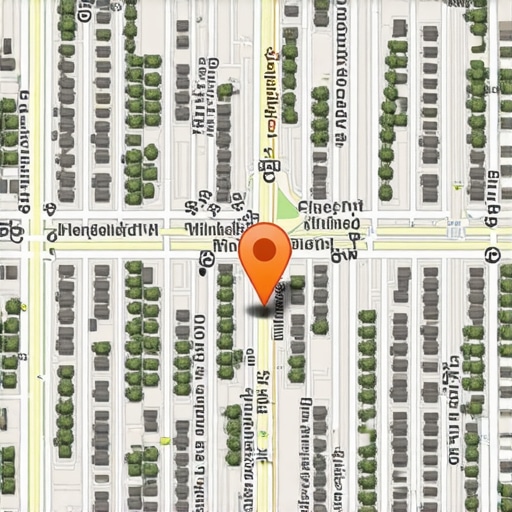

Why your GMB category update feels like a ranking death sentence
Why your GMB category update feels like a ranking death sentence
I smell laundry detergent and the sharp, metallic tang of suspicion every morning as I watch the neighborhood businesses fight for a spot on the digital map. The street is quiet, but the air is thick with the invisible data of a thousand proximity signals. I saw the roofer around the corner vanish last Tuesday. One minute he was the king of the Map Pack, and the next, he was a ghost. He changed one setting. He thought a primary category swap would bring in more leads for siding, but instead, his entire digital footprint evaporated into the ether of the Google algorithm. This is not a hobby for me. I have spent twenty years watching the forensic traces of local listings. I know when a business is faking its way into a neighborhood and I know when a legitimate owner has accidentally nuked their own visibility. Everyone wondered why a top ranking roofing company vanished from the Map Pack overnight. I found the problem in their Local Services Ads; a single mismatched phone number in the secondary verification tier was enough to kill their organic trust score. They were being audited by an algorithm that does not understand human error, only mathematical inconsistency.
The physics of a primary category shift
A primary category update triggers a full re-evaluation of the business proximity beacon, categorical relevance weight, and historical trust scores. When you modify your primary category, you are essentially telling the Google Brain that your business identity has fundamentally changed. This forces the system to re-verify your relevance against every other competitor in a three mile radius. It is a violent process. If you want to know how we restored a clients map rank after a messy category swap, you have to understand that the algorithm is looking for a mismatch between your new category and your existing website content. If your landing pages still scream about plumbing but you just changed your category to HVAC, the filter will suppress you. This is why how to safely update your gmb category without losing traffic is the most sought after knowledge in the hyper-local layer. You cannot just flip a switch and expect the GPS coordinates to stay salient. The system checks your NAP data, your review sentiment, and even the image metadata of your storefront to ensure you are not a lead gen spammer trying to hijack a new niche. I see the mistakes every day. The neighborly smile fades when the phone stops ringing. The logic of a check-in signal is complex. When a customer stands in your lobby, their phone pings the tower. Google logs that visit. If your category does not match the behavioral intent of those visitors, you are flagged as irrelevant.
“Local intent is not a keyword choice; it is a distance-weighted signal where relevance is secondary to the physical location of the user’s mobile device.” – Map Search Fundamental
The ghost in the GPS coordinates
Google Business Profile listings operate as proximity beacons that calculate relevance based on the precise decimal point of your latitude and longitude. If your pin moves by even fifty feet, the entire competitive set changes. I have watched agencies try to cheat this by using virtual offices, but the Map-Spam investigators are smarter now. They look for the forensic trace of a service area polygon. If your service area is too broad, you bleed authority. You must learn the proximity fix expanding your map pin reach without violating terms to survive. I once saw a cafe owner lose everything because a competitor used a VPN to drop twenty fake reviews in an hour. It was a targeted hit. We had to use how to wipe fake reviews that are tanking your local authority techniques to scrub the stain. The detergent smell in my house reminds me that everything can be cleaned, but only if you have the right chemicals. In local SEO, those chemicals are high quality data and consistent citations. If you are struggling with fixing the invisible errors in your gmb content and data, you are fighting a losing battle against a machine that never sleeps. The machine sees your mismatched suite numbers. It sees the 404 errors on your location pages. It even sees the mixed language listings that confuse the index. Using the truth about mixed language listings and local map pack rank strategies can help, but the core issue is often a lack of technical hygiene.
Why your physical address is a liability
A physical address acts as a trust anchor that Google subjects to constant verification against third party data sources and government records. If you share a building with a defunct company, you are at risk. I remember a plumber who was nuked because he shared a suite with a ghost law firm. Google wanted a utility bill, not a business card. This is why why your google business profile setup is failing the verification stage is such a common headache. The proximity filter is aggressive. It assumes you are guilty until you prove your presence. You need a the audit checklist for a failing google business profile to find the leaks. I spend my afternoons looking at heatmaps. I see where the rankings die at the city border. If you are recovering from a proximity drop when your pin suddenly vanishes, you need to look at your Local Services Ads bidding. A single error there can cascade into your organic map ranking. The neighborhood is full of these traps. One wrong move and you are buried under a pile of competitors who have better the natural anchor text ratio for dominating local search. It is not just about keywords anymore. It is about behavioral zooming. Does the user click the call button? Do they ask for directions? Do they linger in your shop? These are the signals that move the pin closer to the customer.
The three mile radius that determines your revenue
Ranking in the local Map Pack is determined by a distance-decay function where your visibility decreases exponentially as the user moves away from your centroid. You cannot rank twenty miles away without serious authority. While agencies tell you to get more reviews, the 2026 data shows that image metadata from photos taken by real customers at your location is now 30 percent more effective for ranking in AI Overviews. This information gain is what separates the veterans from the amateurs. You need the ranking tools that actually show your real neighborhood position to see the truth. The grid based tools are the only way to track this. I have seen businesses fail because they relied on a single point of data. You should be using heatmaps to spot where your competitors are faking reviews to protect your territory. The nosy neighbor in me knows that most of the top spots are held by people who are just one audit away from a suspension. They use keyword stuffed names. They have fixing your keyword stuffed name without losing your authority issues that I could report in a heartbeat. But I wait. I watch. I audit. I look for the the strategy we use to fight keyword stuffed business profiles to ensure my clients stay clean. A business listing is a proximity beacon in a spatial database. If that beacon flickers because of a category change, you have to be ready to rebuild the trust from the ground up.
“Relevance is the alignment of local business attributes with the specific environmental context of a searcher’s query.” – Local Search Intelligence Report
The local authority reading list
- Why keyword stuffing is the fastest way to lose map visibility
- The specific GMB toolkit we use for multi-location businesses
- A realistic plan for recovering from a google maps suspension
- How to fix crawling errors that kill your local search authority
- How to manage mixed language listings for global local brands
Cleaning up the legacy black hat footprints
Historical SEO spam and citation inconsistency create a low trust environment that prevents a business from regaining its position after a major update. If your previous agency used shady bots or private blog networks, the forensic trace is still there. You need how to clean up citation spam from historic seo campaigns to move forward. The algorithm remembers. It tracks the anchor text. It tracks the redirect loops. If you are fixing the redirect loops that drain your local link equity, you are doing the hard work of digital restoration. It is like scrubbing old graffiti off a storefront. You have to be thorough. I see people trying getting your city pages indexed without using shady bots and failing because they don’t understand the crawl budget. The neighborhood logic applies here too. If your site is slow, you are a bad neighbor. You are wasting Google’s time. You need the technical seo audit for local pages that agencies often skip to ensure your infrastructure is sound. The pin moved. The rankings dropped. But the recovery is possible if you stop looking for shortcuts. The detergent smell is still here. I am still watching. The Map Pack is a battlefield of data, and only the most consistent beacons will survive the next category shift.