Turning Map Insights Into a Direct Action Plan for Neighborhood Dominance
Turning Map Insights Into a Direct Action Plan for Neighborhood Dominance
By 2026, the landscape of local search has shifted from a simple directory-style listing to a complex, AI-driven infrastructure. As a Local SEO Consultant and Google Business Profile (GBP) Product Expert, I have watched the evolution of the “near me” search transform from basic keyword matching into sophisticated intent mapping. Today, your Google Business Profile is no longer just a digital business card; it is your primary digital storefront. If you aren’t treating your map presence as a piece of critical engineering, you are leaving the door wide open for your competitors to walk away with your leads.
In this high-stakes environment, neighborhood dominance isn’t achieved by accident. It requires a move away from superficial tactics toward a robust, data-driven strategy. We are no longer just trying to “show up” on a map; we are building an authoritative entity that Google’s AI views as the inevitable solution to a user’s problem. This guide provides the strategic roadmap necessary to navigate the complexities of google business profile seo, ensuring your business doesn’t just participate in the local market but dominates it entirely.
The Proximity Paradox: Why Your Physical Address Isn’t Enough
For years, the conventional wisdom in local search was simple: the closer you are to the searcher, the higher you rank. While proximity remains a core pillar of the algorithm, we have entered the era of the “Proximity Paradox.” In 2026, being the closest physical option is no longer a guarantee of the top spot in the Map Pack. Google’s algorithm now weighs three distinct pillars – Proximity, Relevance, and Prominence – with a much heavier emphasis on the latter two to combat “garage-based” spam and low-quality listings.
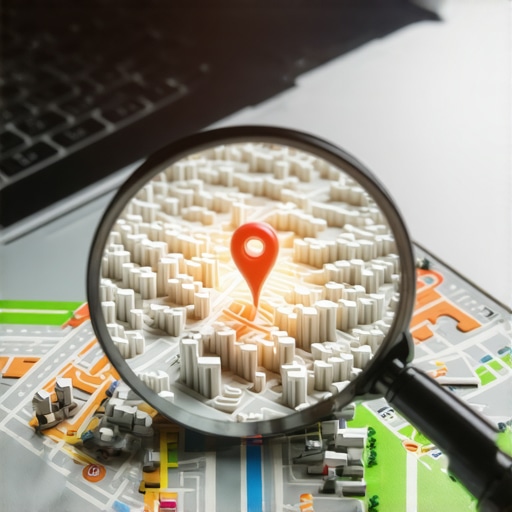
The Proximity Paradox: Why Being Closer Doesn’t Always Mean Ranking First highlights a critical shift: a business three miles away can outrank a business three blocks away if its prominence signals are significantly stronger. Prominence is Google’s way of measuring how “important” your business is in the real world. This is calculated through a combination of your website’s organic strength, your review profile, and your local mentions. In 2026, prominence can effectively override the proximity filter, allowing an authoritative business to “stretch” its ranking radius far beyond its physical location.
To win this battle, you must move beyond the “address-first” mindset. You cannot change where your office is located, but you can change how relevant and prominent you appear to the algorithm. This involves “engineering relevance” by aligning your profile with the specific intent of your target neighborhood. When your infrastructure is built correctly, Google views your business as the most trustworthy option, regardless of a few extra blocks of distance. This is how you begin to break the proximity barrier and start capturing leads from the edges of your service area.
The 10-Minute Audit: Identifying Your “Impression Gap”
Before deploying advanced tactics, you must understand where your current infrastructure is failing. I always recommend starting with a 10-minute deep dive to identify your “Impression Gap” – the space between where your customers are searching and where your pin actually appears. Most business owners look at their dashboard and see “views,” but views are a vanity metric. What matters is visibility at the street level.
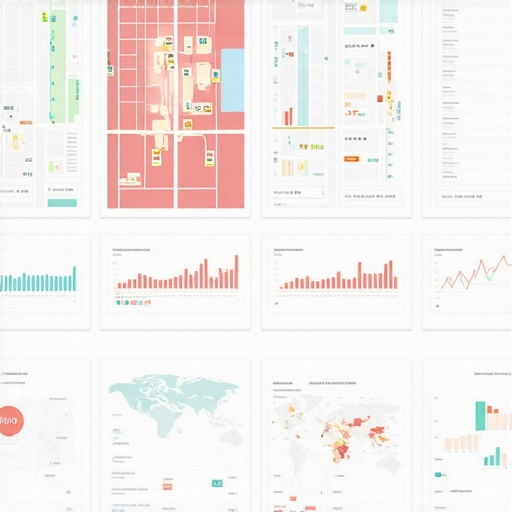
The first step in The 10-Minute Profile Audit We Use to Find Hidden Revenue Leaks is to visualize your current reach. You cannot rely on a single search from your office computer. You need to see how your ranking fluctuates as a user moves across the city. Using a google maps rank tracker allows you to see a grid-based visualization of your rankings. If you are a “1” at your front door but drop to a “10” just two blocks away, you have a proximity-relevance gap that needs immediate attention.
During this audit, look for “revenue leaks.” These are simple technical errors that kill conversion. Is your phone number a tracked line that occasionally fails? Is your appointment link broken or leading to a generic contact page? Does your primary category accurately reflect your most profitable service? For example, a lawyer specializing in personal injury should not be categorized under “General Practice” if they want to capture high-intent traffic. Identifying these gaps allows you to stop the bleeding before you start the growth phase of your local seo strategy 2026.
Building the Infrastructure: Categories, Services, and NAP
If your Google Business Profile is a house, then your Categories, Services, and NAP (Name, Address, Phone) are the foundation. Many businesses treat these as “set it and forget it” fields, but in a competitive landscape, they require precision engineering. The primary category is the single most important piece of data on your profile. It tells Google what you *are*, while secondary categories tell Google what you *do*.
When performing google business profile optimization, you must be surgical with your category selection. If you are an HVAC contractor, “HVAC Contractor” is your primary, but you must support this with secondary categories like “Air Conditioning Repair Service” and “Heating Contractor.” However, be careful not to dilute your authority. Adding unrelated categories (e.g., a plumber adding “General Contractor”) can confuse the algorithm and weaken your relevance for your core service. Your goal is to build a “cluster of relevance” around your primary offering.
The “Services” menu is often neglected. In 2026, Google uses the text within your services list to match with long-tail AI queries. If a user asks their voice assistant for “emergency pipe burst repair near me,” and you have that exact phrase in your services description, your chances of winning that lead skyrocket. Furthermore, NAP consistency remains the non-negotiable bedrock. Your name, address, and phone number must be identical across your website, your GBP, and every local directory. Even a small discrepancy – like “Street” vs. “St” – can create a “data conflict” that lowers your trust score in the eyes of the algorithm. This is the “foundation of the house”; without it, the rest of your SEO efforts will eventually sink.
The Service-Area Business (SAB) Nuance
For contractors, cleaners, and other service-area businesses without a physical storefront, infrastructure is even more vital. Since you don’t have a permanent pin on the map that users can visit, your “Service Areas” must be defined with extreme accuracy. Do not simply select an entire state. Instead, list specific zip codes and major neighborhoods. This creates a hyper-local data map that helps Google understand exactly where your “virtual” relevance should be applied.
The Review Engine: Beyond Volume to “Velocity” and “AI Sorting”
We have moved past the era where having the “most” reviews was the only goal. In 2026, Google’s AI has become incredibly adept at sorting reviews by relevance and recency. A business with 500 reviews from three years ago will often be outranked by a business with 50 reviews generated in the last three months. This is known as “Review Velocity,” and it is a primary signal of a healthy, active business.
Understanding How Review Velocity Pushes Your Pin Above Rivals With More Five-Star Ratings is key to maintaining your position. Google wants to see a steady, natural heartbeat of feedback. If you get 20 reviews in one day and then none for a month, it looks like a coordinated manipulation attempt. Instead, you need a system that consistently asks every customer for feedback immediately after the service is rendered. This consistent flow signals to the algorithm that your business is currently popular and reliable.
Furthermore, the content of the reviews now matters as much as the star rating. Google’s AI analyzes reviews to find “justification” for ranking you. If a user searches for “best dental implants,” Google will look for reviews that specifically mention “dental implants.” To leverage this, you should use a “Review Friction” script. When asking for a review, don’t just say “leave us five stars.” Say, “Could you mention the specific service we provided, like the ‘kitchen remodel’ or ’emergency plumbing,’ and the neighborhood we served you in?” When customers include these keywords naturally, they are essentially writing your local SEO content for you, creating a powerful trust signal that is nearly impossible for competitors to fake.
Hyperlocal Content: Winning the “Street Corner” Battle
To truly dominate a neighborhood, you have to prove to Google that you are a part of that neighborhood’s fabric. National directories like Yelp or YellowPages are “generic signals.” While they are necessary for baseline trust, they won’t help you win the “Street Corner” battle against a savvy competitor. This is where Signal Stacking: Why Hyper-Local Mentions Beat Generic National Backlinks comes into play.
A link or a mention from a local neighborhood association, a sponsorship of a local little league team, or a guest post on a city-specific blog carries ten times the weight of a generic backlink. These signals tell Google that your business is physically and socially integrated into a specific geographic coordinate. This is the essence of google maps lead generation: being the most relevant answer for a specific location. You should aim to build a “moat” of local relevance that national competitors can’t touch.
Another powerful tactic is The Hyperlocal Content Trick That Finally Solved Our Map Coverage Gaps. This involves creating “City Pages” or “Neighborhood Guides” on your website that are linked directly from your Google Business Profile posts. If you want to rank in “North Hills,” create a page specifically about your services in North Hills, featuring photos of projects you’ve done there, local landmarks, and even local weather considerations. By “Signal Stacking” these geo-targeted pages with your GBP activity, you create a localized relevance loop that forces Google to recognize your authority in that specific suburb. This is how you close the coverage gaps identified in your initial audit.
Advanced Geo-Targeting for 2026
- EXIF Data: Ensure the photos you upload to your GBP are taken on-site with GPS metadata enabled. This provides raw, undeniable proof of your location-based service.
- Local Citations: Focus on “niche-local” citations. If you are a lawyer, a link from the local Bar Association is worth more than a hundred generic blog comments.
- Community Engagement: Use the “Updates” feature on GBP to post about local events you are attending or supporting. This keeps your profile active and geo-relevant.
Future-Proofing for 2026: AR-Scans and the Density Filter
As we look toward the end of 2026, the technical requirements for google business profile seo are becoming even more stringent. One of the most significant shifts is the introduction of AR-Scan verification. Google is increasingly requiring businesses – especially those in “High Risk” categories like locksmiths or movers – to perform an Augmented Reality scan of their physical location via the GBP app. This is designed to eliminate “ghost offices” and virtual addresses. If your infrastructure isn’t real, you won’t survive the 2026 verification wave.
Additionally, we are seeing the rise of the “New Density Filter.” In highly saturated areas – think “Dentists in Downtown Chicago” – Google is starting to “clip” profiles that are too similar to one another to provide a better user experience. If your profile looks exactly like the five others on your block, you might be hidden from the default view. To beat this filter, you must differentiate your “Entity.” This means having unique services, highly specific “From the Business” descriptions, and a robust set of “Attributes” (e.g., “Black-owned,” “Veteran-led,” “Wheelchair accessible”).
Adapting to these changes requires a proactive approach. This 2026 Local SEO Plan Beats the New Density Filter by focusing on “Entity Uniqueness.” Don’t just be another pin on the map; be the pin that offers something the others don’t. Whether it’s 24/7 availability, specialized AI-driven diagnostics, or a unique neighborhood history, these “Entity Signals” are what will keep you visible when the density filter starts thinning out the herd. Rank higher on google maps by being the most distinct and verified option in your immediate vicinity.
Conclusion: Your 30-Day Roadmap to the Top 3
Dominating the Google Map Pack in 2026 is not a matter of luck; it is a matter of superior infrastructure. By following this roadmap, you can move from being an invisible participant to a neighborhood leader. The process is clear: start with a technical audit to find your leaks, build a rock-solid foundation of categories and NAP, ignite your review engine to generate consistent velocity, and stack hyperlocal signals to prove your community authority.
The businesses that win in 2026 will be those that stop treating SEO as a monthly chore and start treating it as a core business asset. Stop guessing where your business stands and start using professional local seo tools to track your progress and visualize your growth. The data is there – you just need to turn those map insights into a direct action plan. If you are ready to take your google maps ranking service to the next level, the time to start building your infrastructure is today.