The Setup We Use to Track Local Rank Without the Fluff
I spent three months fighting a hard suspension for a plumbing client whose listing was nuked simply because they shared a suite number with a defunct law firm. Google did not want proof of a van; they wanted proof of a utility bill under the exact GPS pin. That experience taught me everything I needed to know about the cold reality of spatial database management. It is not about pretty graphs or buying the newest shiny software. Your rankings are determined by raw location data, verification flags, and coordinate logic. When you track performance, you have to peel back the corporate paint and look at the underlying wires.
The illusion of national search engine tracking software
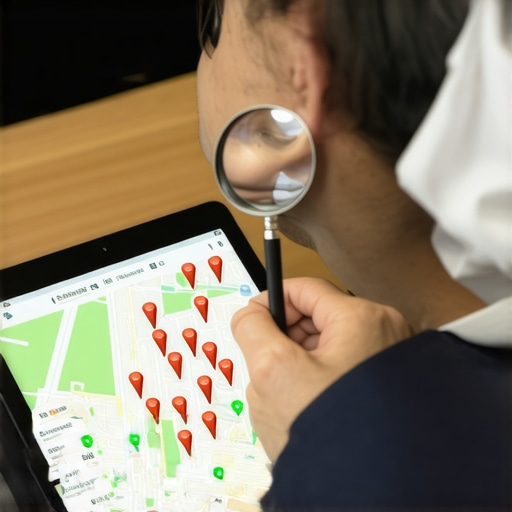
National ranking trackers are fundamentally useless for analyzing local map pack visibility because they rely on single IP address lookups instead of real coordinate data. When you check your search positioning from a centralized server, you completely miss the hyper-local variations that happen block by block. A business does not rank across an entire metropolitan area. It ranks in a shifting, organic web of coordinates influenced by the searcher’s physical steps. If you are not measuring these physical coordinates, you are missing the real picture of how your business appears to actual customers in your neighborhood.
We have watched agencies spend thousands of dollars on enterprise tracking tools only to realize they were looking at aggregated, nationwide metrics. These numbers do not reflect the micro-level movements of your digital assets. If a user walks three blocks west, the entire map pack structure changes. Your business might drop from first to fifth because another competitor is fifty feet closer. To fix these gaps, you need technical services that focus on physical locations rather than generic web trends. Understanding this difference is what keeps real local businesses alive while the larger chains overspend on national brand campaigns that miss the target entirely.
“Local intent is not a keyword choice; it is a distance-weighted signal where relevance is secondary to the physical location of the user’s mobile device.” – Map Search Fundamentals
We do not rely on standard reports. We want to see how your map pin behaves in the wild. If your business location is slightly off, Google will filter you out of nearby queries. Our goal is to look at real-time local search metrics without the unnecessary fluff that most reporting tools generate to justify their monthly subscription costs.
Local Authority Reading List
- Find the tools we rely on for accurate neighborhood monitoring at ranking tools that actually show real time neighborhood data.
- Understand how to manage multiple profiles effectively using the specific gmb toolkit we use for multi location businesses.
- Learn how to evaluate your presence without expensive subscriptions by reading why buying gmb tools wont replace a solid local strategy.
- Discover the warning signs of a declining profile with the audit checklist for a failing google business profile.
- Spot coordinate errors before they hurt your traffic using fixing map pin drifts after updating service area boundaries.
The math behind proximity grid patterns
Proximity grid patterns show that map rankings degrade exponentially rather than linearly as a user moves away from your registered address centroid. A physical address has a specific spatial pull that is strongest at the center of its coordinates. As a searcher walks away, the local search algorithm shifts its priority to other nearby verified locations. This means your visibility is a series of concentric circles of varying strength. Mapping these circles allows you to see exactly where your marketing efforts are succeeding and where they are failing to register with Google local bots.
Most business owners do not realize that their service area settings can cause real ranking volatility. If you change your physical parameters, your authority might drop in areas where you previously dominated. This is why we use a specialized approach to track local positioning. We do not just look at your primary location. We look at the surrounding intersections and commercial hubs to see where your competitor is taking your traffic. This physical reality is why we always recommend looking at coordinate maps rather than static keyword reports.
When a competitor starts manipulating their location markers, it can push your business off the map completely. If you want to protect your ranking, you have to monitor the neighborhood data closely. We use advanced diagnostic checklists to ensure your physical information is perfectly aligned with what the map systems expect. If you find errors, you can use specialized tools to clean up your data before the algorithm flags your profile for a manual review.
How name address and phone number data gets scrambled
Inconsistent location data across old directories and local platforms creates index confusion that directly dampens your maps authority score. When search engines crawl the web, they look for matching signals of your business name, address, and phone number. If they find different variations, they lose confidence in your actual location. This lack of confidence will cause your map pin to slip in rankings. Cleaning up these issues is critical if you want to maintain a strong presence in highly competitive markets.
Many business owners inherit old profiles with incorrect data from past marketing campaigns. These historic errors act like an anchor on your current rankings. Using automated systems to fix these issues often makes the problem worse. These tools often overwrite correct data with generic information. A manual approach to cleaning up your listings is always more effective because it ensures every single record is accurate and fully verified.
“Consistency of NAP data is not about citation volume; it is about reducing the algorithmic variance when search engines attempt to reconcile spatial database discrepancies.” – Local Database Intelligence Report
We focus on fixing indexing issues and crawling errors that prevent your pages from showing up. If your website has structured data errors, the map systems will not be able to connect your local landing pages with your Google Business Profile. Fixing these technical issues is the first step to building a resilient local search presence.
Local Authority Reading List
- Discover the tools we use to diagnose map placement issues at the map pack toolkit tools we use to fix stalled rankings.
- Learn how to handle data conflicts on your site with fixing structured data errors that confuse google local bots.
- Address historic citation issues properly by reading how to clean up citation spam from historic seo campaigns.
- Understand the risks of automated tools with why automated citation tools often make map rankings worse.
- Clean up conflicting details that confuse customers by using wiping out wrong business info that confuses both google and customers.
The danger of keyword stuffed business profiles
Keyword stuffing your Google Business Profile name will trigger an immediate algorithmic filter or a permanent hard suspension. While it is true that having keywords in your business name can temporarily boost your rankings, it is a direct violation of terms of service. Competitors are constantly looking for listings to report, and search engines are getting better at identifying spam names. When your listing is flagged, your maps traffic will drop to zero overnight.
If you have already stuffed your name with keywords, you need to fix it safely without losing the authority you have built over the years. This requires a careful transition plan. You cannot just change the name and hope for the best. You need to update your legal documents, your website, and your local profiles to reflect the real, legitimate name of your business. This prevents search engines from flagging your profile as a fraudulent listing during the edit process.
We see businesses lose their rankings constantly because they tried to cheat the system. Real local search success comes from building authority through genuine customer reviews, high-quality local links, and accurate spatial data. If you are struggling with a suspended profile, you need professional recovery services that understand how to communicate with the engineering teams directly to get your listing restored.
How backlink profiles influence maps proximity strength
Low quality backlink profiles directly degrade the digital trust signals required to rank in competitive map pack locations. Many people assume that local search is entirely separate from organic search engine optimization. In reality, the authority of your website is what powers your map ranking. If your website is associated with spam links or low-quality directories, your map visibility will suffer. You must audit your link profile regularly to remove toxic signals that are holding you back.
If you have noticed a sudden drop in your maps traffic, it could be the result of a negative SEO attack or a change in how the algorithm views your backlink profile. Disavowing bad links and building high-quality, local citations is the only way to recover your position. This requires a technical approach to identify which links are helping your business and which ones are dragging you down.
We work to clean up inherited link issues and build genuine local authority. We focus on getting links from real local organizations, community groups, and regional directories. These links are far more valuable than cheap guest posts because they send strong local signals directly to the search crawlers.
Local Authority Reading List
- Recover your maps positioning after a link penalty by reading disavowing bad links to restore your map pack authority.
- Learn how to audit your site after a traffic loss with how to audit your local backlink profile after a major traffic drop.
- Understand how to fix toxic backlink profiles at cleaning up toxic backlinks before they kill your local search rank.
- Discover the impact of clean data on your maps presence at the local seo moves that help you recover after a search ranking crash.
- Clean up your historical footprint with how to rebuild authority after a low trust lead gen listing cleanup.
The real process of recovering a suspended map profile
Recovering a suspended Google Business Profile requires absolute proof of physical location and a manual appeal rather than automated form submissions. When your listing is suspended, it is usually because the algorithm detected a conflict in your data or suspected that you do not operate a real physical business at the address. To get reinstated, you must provide clear, undeniable evidence of your operations. This includes utility bills, business licenses, and photos of your storefront with permanent signage.
Many business owners try to solve suspensions by submitting multiple automated requests. This only delays the process because it clogs the support system and often results in automatic rejections. You need to find the exact reason for your suspension, fix the underlying data issues, and submit a clear, organized manual appeal. This is the only way to get a human reviewer to look at your case and restore your business listing.
If you are a home-based business or a service area provider, the process is even more complex. You do not have a physical storefront, which means you must prove that your employees actually travel to customers in your service area. We specialize in helping service area businesses navigate these hard suspensions and get their listings back online without losing their hard-earned search history.
Structuring local pages to capture coordinate authority
Optimizing local landing pages with hyper-local content and clean schema markup is the most reliable way to expand your maps visibility. You cannot rely solely on your business profile to rank in surrounding neighborhoods. You need to create pages that speak directly to the specific streets, intersections, and landmarks where your customers live. This content must be structured correctly so that search engines can easily parse your location signals.
Many local pages fail because they are filled with generic text and keyword-stuffed lists of zip codes. This does not help your rankings and can actually trigger a content stuffing penalty. Instead, you need to write about actual community projects, local partnerships, and specific services you offer in each area. This creates genuine relevance that helps your business stand out in local search results.
We also make sure your structured data is perfectly aligned with your business profile. If there is a mismatch between the schema on your website and the information on your maps listing, search engines will lose trust in your location. Fixing these technical issues is a critical part of our overall strategy for local dominance.
Local Authority Reading List
- Discover the correct way to build neighborhood content at how to increase map leads using specific hyperlocal service pages.
- Learn how to fix schema validation issues with fixing broken json ld schema that mismatches your business data.
- Understand why your structured data might be failing by reading why your structured data isnt triggering rich local snippets.
- Explore tactical neighborhood optimization techniques at the neighborhood tactics that actually move your pin closer to customers.
- Avoid critical technical audit mistakes with the technical seo audit for local pages that agencies often skip.
The truth about competitor spam on the maps
Competitors routinely use fake listings and keyword-stuffed names to crowd legitimate businesses out of the map pack. If you are operating honestly, it can be incredibly frustrating to see fake addresses and virtual offices ranking ahead of your physical storefront. You do not have to accept this as the status quo. You can take action to identify and report these spam listings to clean up your local market.
We do not use complex, expensive software to find spam. We use simple manual methods to verify whether a competitor actually exists at their registered address. If we find that they are using a PO box or a shared workspace without a dedicated office, we document the evidence and submit it directly to the maps support team. This helps restore fair competition and opens up valuable ranking positions for real local merchants.
Dealing with spam requires a systematic approach. You cannot just flag every competitor you see. You must build a strong case with photographic evidence and public records to prove that a listing is violating terms of service. This is the only way to ensure the spam team takes your reports seriously and removes the fraudulent profiles from the maps.