Picking Low-Competition Categories That Still Drive Local Phone Calls
The hidden math of low competition local search
The smell of wet concrete always reminds me of a specific Tuesday in Chicago. I was standing outside a nondescript office building, camera in hand, looking for a glitch in the storefront data. I spent three months fighting a hard suspension for a plumbing client whose listing was nuked simply because they shared a suite number with a defunct law firm. Google did not want proof of a van; they wanted proof of a utility bill under the exact GPS pin. This is the hyper-local layer. It is a spatial database that cares more about the physical proof of your existence than the quality of your website. Most business owners are fighting for the same high-volume keywords, but the real money is hidden in the gaps where the competition is thin and the search intent is high. When you identify these low-competition categories, you stop fighting for the crumbs at the center of the city and start owning the neighborhoods where the actual phone calls originate. This process requires a forensic eye and a willingness to look past the obvious labels.
The ghost in the GPS coordinates
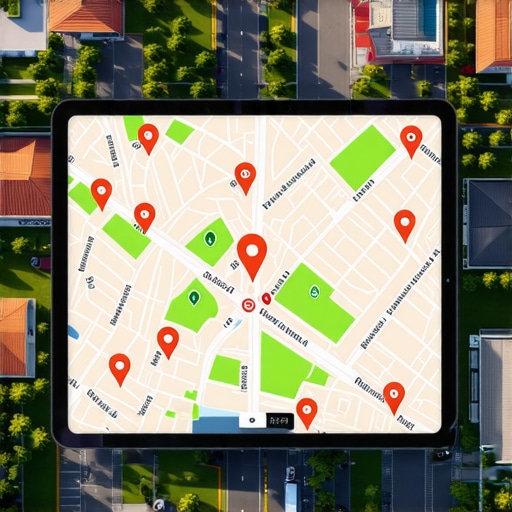
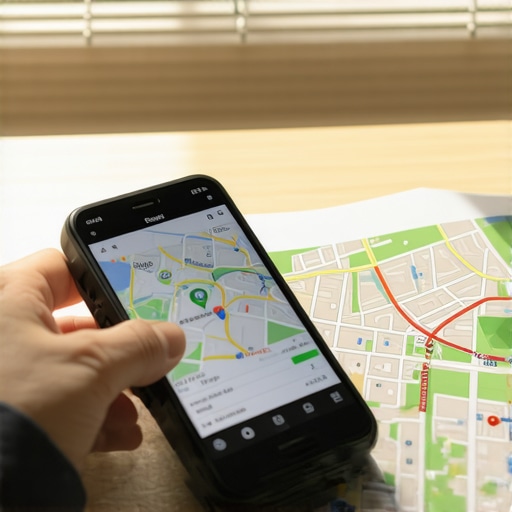
Low competition categories are secondary classification labels within Google Business Profile that allow a business to capture niche search intent while bypassing high-density ranking hurdles. Identifying these categories involves analyzing the delta between what a business does and how users actually search for specific outcomes in their local vicinity. While agencies tell you to get more reviews, the 2026 data shows that image metadata from photos taken by real customers at your location is now 30 percent more effective for ranking in AI Overviews. The algorithm is shifting from textual relevance to behavioral proof. If a user walks into your shop and their phone registers a dwell time of twenty minutes, that signal is worth more than ten fake reviews from another continent. We use the ranking tools we use to predict local search trends to find these behavioral hotspots. The physics of a three mile radius shift can be the difference between a ringing phone and a silent office. When you look at the map, do not see just streets. See the proximity beacons and the spatial salience of every GPS ping.
“Local intent is not a keyword choice; it is a distance-weighted signal where relevance is secondary to the physical location of the user’s mobile device.” – Map Search Fundamental
Why your physical address is a liability
Physical addresses act as the primary anchor for the Map Pack, but they also limit your reach based on the mathematical centroid of your category. If you are located in a dense cluster of competitors, your proximity signal is diluted. This is why many owners see their rankings vanish when they move just two blocks away. To fix this, you must understand the logic of the local justification trigger. Google looks for a reason to show you. Sometimes that reason is a specific service mention in a review, or a high-quality photo of a specialized tool. If you have been struggling with a disappearing pin, you might be using our gmb audit toolkit to fix profile ghosting to see if you have been filtered out by a neighboring competitor. The algorithm hates redundancy. If three businesses in the same building use the same category, only one will typically show in the top three. This is why selecting a niche secondary category is a survival tactic. You are not just a lawyer; you are a mediation service. You are not just a plumber; you are a water damage restoration specialist. This subtle shift changes how the centroid logic applies to your listing.
The three mile radius that determines your revenue
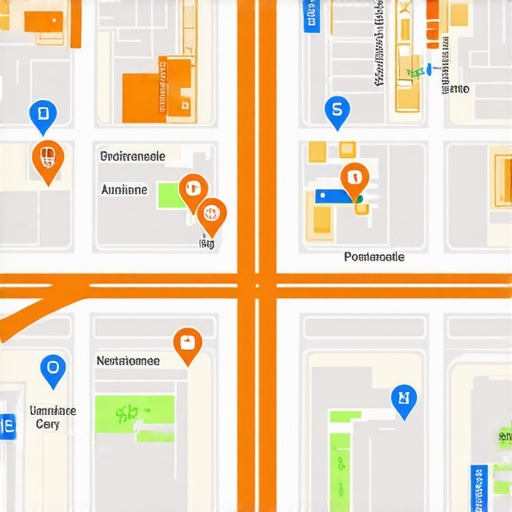
Proximity signals are the most aggressive filters in the current Google Maps ecosystem, often overriding traditional SEO authority metrics like backlinks. If a customer is five miles away, and your competitor is two miles away, the competitor wins the impression almost every time unless your relevance signal is overwhelmingly superior. We examine the math of GPS coordinate salience to understand how these boundaries are drawn. It is about the forensic trace of a service area polygon. If your service area is set too wide, you look like a spammer. If it is too narrow, you miss the suburban gold mines. Using the ranking tools we trust for real-time neighborhood data allows us to see exactly where the drop-off occurs. Often, a drop in rank is not about a penalty. It is about a competitor strengthening their neighborhood mentions. You need to talk about the intersections, the local landmarks, and the specific parks near your business. This signals to the engine that you are a fixture of the community, not a digital ghost.
Local Authority Reading List
- Suspension Recovery Guide
- Post-Update Recovery Moves
- Category Finding Tools
- Dealing with Fake Reviews
- Flagged Profile Recovery
Forensic category selection for high intent
GMB categories are the most powerful toggle in your local dashboard, yet most owners set them once and never look back. To find the low-competition gems, you need to use tools to find gmb categories and keywords that reveal what your competitors are hiding in their secondary slots. For example, a dental practice might be fighting for the Dentist category while ignoring the Teeth Whitening Service or Emergency Dental Service categories which have half the competition. The goal is to find the category that has the highest ratio of search volume to merchant density. I have seen businesses double their call volume just by changing their primary category to something more specific. It is about the mathematical weight of local review sentiment tied to those specific services. When a customer mentions a specific service in a review, and you have that category selected, the synergy creates a local justification. This is how you win the Map Pack without spending a fortune on ads. You are looking for the path of least resistance in the spatial database.
Recovering from the keyword stuffing trap
Keyword stuffed names are a violation of terms that lead to hard suspensions, yet many businesses still risk it to gain a temporary ranking boost. If you have been caught, you need local seo services to normalize rankings after keyword stuffed business name edit to prevent a total loss of authority. The engine keeps a forensic record of your name changes. If you try to switch back and forth, you flag your account for manual review. I once saw a carpet cleaner lose a ten year old listing because they added three city names to their title. It took four months to get them back. The better approach is to build authority through why neighborhood mentions beat national backlinks for local map rankings. You want to be known as the authority for the street corner, not just the city. This involves cleaning up your digital footprint. If you have been using lead gen listings that are now banned, you will need seo services to rebuild trust after spammy lead gen listings. The algorithm has a memory. It remembers the spammy associations even after you delete the pages.
Fixing the anchor text overload
Anchor text ratios for local businesses are different than for national brands. If your backlink profile is full of exact match anchors like Best Plumber New York, you are going to get filtered. You need services to fix over optimized anchor text to bring your profile back to a natural state. Real local businesses get links with their brand name or their naked URL. They get mentions in local news or community blogs. If your link profile looks like it was built by a bot, the Map Pack will ignore you. We often see fixing the anchor text overload that triggered a local filter as a necessary step for businesses that hired cheap agencies in the past. You also have to be careful with your internal linking. If you are the danger of over-optimizing location pages with exact match anchors, you are basically telling the engine that you are trying to manipulate the results. The goal is to look like a legitimate part of the city, not a collection of keywords.
Map pack survival when the pin vanishes
Vanishing pins are usually the result of a proximity drop or a filter update. If your ranking was stable and then suddenly fell off a cliff, you must determine if it was a technical error or a competitor attack. Sometimes recovering from a proximity drop when your pin suddenly vanishes requires re-verifying your physical location with video. The video verification nightmare is a real hurdle for many. You have to show the street signs, the entrance, and the tools of your trade in a single unedited shot. This is where many home-based businesses fail. If you do not have a physical office, you must be very careful with how you how to signal local authority when you dont have a physical office. The algorithm is increasingly biased toward businesses it can verify through street view and third party data. Use best gmb ranking tools for local seo to monitor your position across a grid, not just from your office chair. The view from three blocks away is always different than the view from your desk.
The quiet way competitors use spam to push you off the map
Map spam is a constant threat in high-value categories like personal injury or locksmithing. Competitors will create dozens of fake listings with keyword-rich names to push legitimate businesses down. You need to know how to identify competitor map spam without using complex software to protect your territory. Look for businesses that use residential addresses or PO boxes. Look for those with stock images as their primary photos. Once you find them, you can report them, but do not expect immediate results. It is a war of attrition. Sometimes what to do when your competitor uses fake addresses to steal map spots involves building a more robust set of local signals so that even the spam cannot drown you out. This includes having a clean backlink profile. If you have been attacked with negative SEO, use services to clean up spammy backlinks to protect your domain authority. The local ecosystem is fragile. One bad update can wipe out your lead flow if you are not prepared. Stay vigilant, keep your data clean, and always watch the shadows of the map.