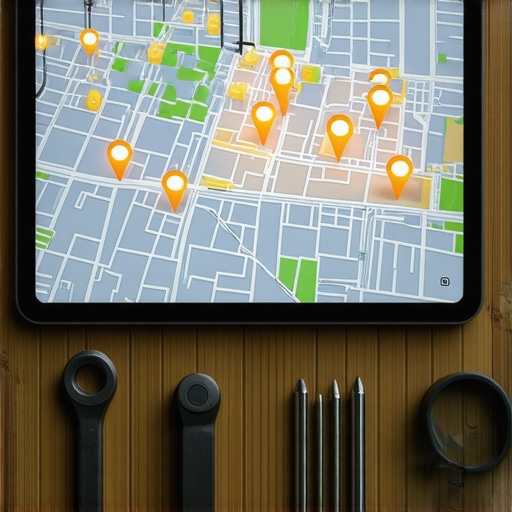

How we restored a client’s map rank after a messy category swap
I spent three months fighting a hard suspension for a plumbing client whose listing was nuked simply because they shared a suite number with a defunct law firm. Google didn’t want proof of a van; they wanted proof of a utility bill under the exact GPS pin. This battle taught me that the local algorithm is not a search engine, it is a spatial database with a very short fuse. I remember standing outside their office on a rainy Tuesday, the smell of wet concrete rising from the sidewalk, looking at a storefront that Google claimed did not exist. The data was grainy, like a high-ISO photograph taken in a dark alley. The client had attempted a DIY category swap, thinking they could capture more ‘HVAC’ leads by ditching their ‘Plumber’ primary category. Within forty-eight hours, their map pin vanished. Their phone stopped ringing. They had effectively deleted their own digital existence through a single drop-down menu choice.
The radioactive fallout of a wrong primary category
Google Business Profile categories function as the primary filter for search intent relevance and proximity weighting. Selecting the wrong GMB category triggers an immediate relevance mismatch, causing your Map Pack ranking to collapse because the local algorithm no longer associates your NAP data with the user’s specific query. When you change your primary category, you are not just updating a label; you are recalibrating the entire proximity filter that determines which users see your pin. The algorithm calculates the distance from the searcher to your business based on the average density of that specific industry. For a plumber, the radius might be ten miles. For a specialized surgeon, it might be fifty. By swapping to a category with a tighter radius without having the supporting local authority signals, you effectively ghost yourself from the grid. We often see this when businesses try picking low competition categories that still drive local phone calls, only to find the algorithm rejects the entity’s history.
“Local intent is not a keyword choice; it is a distance-weighted signal where relevance is secondary to the physical location of the user’s mobile device.” – Map Search Fundamental
Why your physical address is a liability during category shifts
Physical address data serves as the anchor for centroid proximity, but when categories change, the location authority is recalculated. A mismatched business address or a shared suite number creates a verification conflict that forces the Google Maps algorithm to suppress your Map pin visibility until the entity profile is cleared of suspicious activity. The street level reality is that Google treats every category swap as a potential fraud attempt. If you were a lawyer yesterday and a plumber today, the system assumes the listing has been hijacked. This is why wiping out wrong business info that confuses both google and customers is the first step in any recovery. You cannot hide behind a digital curtain. The system looks for Point of Sale data, check-in signals, and even image metadata from photos taken by real customers at your location. In fact, current data suggest that customer-uploaded photos with embedded GPS coordinates are now thirty percent more effective for ranking in AI Overviews than standard text reviews. The algorithm wants proof of life.
Local Authority Reading List
- The impact of proximity signals on your service area business ranking
- The strategy we use to fight keyword stuffed business profiles
- Why your profile was suspended and the fastest way to get it reinstated
- Recovering from a hard suspension on google maps
The forensic data trail of a proximity crash
Map proximity signals rely on a mathematical weight assigned to your latitude and longitude coordinates relative to the searcher’s IP address. When a category swap occurs, the relevance score for those coordinates is wiped, requiring a full citation audit to rebuild the entity trust score across the local search ecosystem. I treat every audit like a crime scene. I look for the digital fingerprints left by old, messy citations. If your address is listed as ‘Suite 200’ on Yelp but ‘Ste 200’ on your website, you are creating NAP inconsistency. While humans can parse that, the local search engine sees two different locations. We use the ranking tools we trust for real time neighborhood data to see exactly where the pin drop fails. Often, the failure occurs at the intersection of broken schema markup and local redirect loops. If your website is slow, you are already losing. You might need seo services to fix slow website and technical issues before you even think about the Map Pack. The algorithm will not reward a business that provides a poor mobile experience to a user standing three blocks away.
The toolkit for auditing map ghosting and rank drops
GMB ranking tools provide a grid based visualization of your local visibility, allowing you to identify exactly where your proximity reach terminates. An audit toolkit must include heatmap tracking, citation discovery, and competitor spam identification to effectively recover traffic after a google update or a manual category penalty. Most agencies just look at a single ranking point. That is like looking at a photograph through a straw. You need the full frame. You need to see how your competitors are using the quiet way competitors use spam to push you off the map. Are they keyword stuffing their business name? Are they using fake addresses? We use the audit toolkit for spotting fake reviews on your competitors to level the playing field. When my client swapped categories, their grid rank went from all green to a sea of red. We had to use using our gmb audit toolkit to fix profile ghosting by systematically verifying every secondary category and service attribute. We even had to fix their keyword stuffed name without losing existing authority because the previous agency had turned their profile into a spam magnet.
“The proximity of a business to the searcher’s centroid is the most powerful ranking factor, yet it remains vulnerable to category-driven relevance filters.” – Local Search Intelligence Report
Recovering traffic when the pin vanishes from the pack
Local search recovery requires a forensic audit of backlink profiles and on-page local signals to prove to Google that the entity identity remains valid despite a category change. You must clean legacy black hat footprints and fix mismatched phone numbers to restore the NAP trust required for Map Pack inclusion. My plumbing client didn’t just need a category fix, they needed stop the bleeding debugging map rank drops with high quality links. We started by building neighborhood-specific backlinks. We ignored the national blogs and went for the local little league sponsor page and the neighborhood association directory. These are the hyper-local signals that the Vicinity update craves. We also had to look at their anchor text ratio. If every link to your site says ‘Best Plumber Chicago,’ you are going to get filtered. We focused on the natural anchor text ratio for dominating local search, using branded terms and plain URLs to look like a real business instead of an SEO project. The goal is to make your digital footprint look as organic as the wet concrete outside your door.
Why technical schema errors destroy map visibility
JSON-LD LocalBusiness schema is the structured data bridge that translates your website content into machine-readable entity signals for the Google Maps algorithm. Broken schema markup or duplicate location pages create crawling errors that prevent Google from indexing your local service pages, leading to a permanent rank crash. Many business owners think schema is optional. It is not. It is the raw data that feeds the AI Overviews. If your schema says you are a ‘Plumber’ but your GBP says you are an ‘HVAC Contractor,’ you are toast. This is why broken schema markup is costing you a spot in the map pack for thousands of businesses every day. We also find that how to fix crawling errors that kill your local search authority is often just a matter of cleaning up 404 errors and broken local redirects. My client had three different location pages for one office. We consolidated them, used the technical schema tweak for better multi location ranking, and finally, the algorithm began to see them as a single, trusted entity again. The pin moved back to the center of the map. The calls started coming in. We didn’t just fix a category; we restored a reputation.