
The audit checklist for a failing Google Business Profile
The logistics of a failing profile
The grid does not lie. In the world of local search, your business is a node in a spatial database, and if the data flow is interrupted, your revenue stops. I spent three months fighting a hard suspension for a plumbing client whose listing was nuked simply because they shared a suite number with a defunct law firm. Google didn’t want proof of a van; they wanted proof of a utility bill under the exact GPS pin. That experience taught me that the algorithm is a cold logistics manager. It values efficiency and verification above all else. When a profile fails, it is rarely a mystery. It is a data mismatch. A broken link. A proximity filter that has decided your business is no longer the most efficient answer for a user. We are going to inspect the microscopic math of your local presence.
The ghost in the GPS coordinates
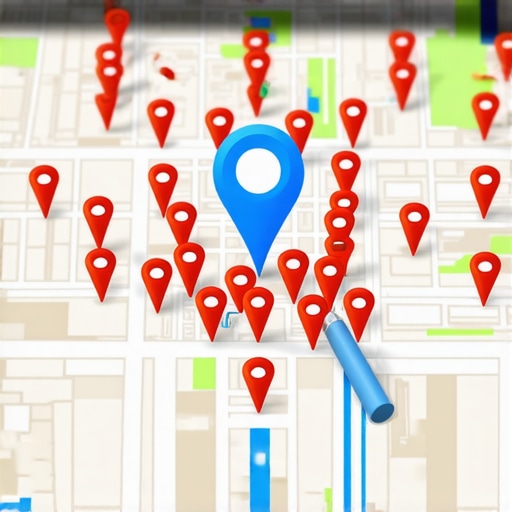
Proximity signals dictate everything in the Map Pack ecosystem. When a Google Business Profile fails, the GPS coordinates often reveal a centroid shift or a proximity filter triggered by inconsistent NAP data across the local search environment. This prevents your business from appearing for high intent mobile queries in your immediate neighborhood. The pin moved. It happens when the algorithm detects a conflict between your claimed location and the signals coming from third party directories or behavioral pings from customer devices. If you are recovering from a proximity drop when your pin suddenly vanishes, you must first look at the precision of your map placement. A distance of fifty feet can be the difference between the first spot and the tenth page. Google calculates the geographic friction of every search. If your listing has a high friction score, you are invisible. You can use the ranking tools that actually show your real neighborhood position to see how far your reach truly extends. Often, owners believe they cover the whole city while the algorithm has them locked in a two block radius.
Why your physical address is a liability
Physical addresses serve as the primary trust signal for Google Maps, but they become a liability when hidden address settings or service area polygons are misconfigured. Duplicate profiles at the same location or virtual office footprints trigger hard suspensions and listing ghosting in the Map Pack. The algorithm hates ambiguity. If you share a building with ten other businesses, the data becomes muddy. This is where the 5 step process for cleaning up inherited gmb issues becomes your manual. You need to differentiate your suite or entrance with unique imagery and precise schema. Many agencies fail to mention that why your google business profile setup is failing the verification stage often comes down to the mail carrier’s route. If the post office does not recognize the sub-address, the algorithm assumes it is a spam listing. You are fighting a war of logistics. Every piece of paper must match. Every digital footprint must lead back to the same concrete slab.
“Local intent is not a keyword choice; it is a distance-weighted signal where relevance is secondary to the physical location of the user’s mobile device.” – Map Search Fundamental
The three mile radius that determines your revenue
Revenue in local search is determined by a three mile radius around the business location where proximity signals are strongest. Businesses must optimize for hyperlocal keywords and neighborhood justifications to maintain Map Pack visibility against competitor spam and proximity filters that favor closer storefronts. This is the law of the land. If a competitor is closer to the user, you have to work twice as hard to prove relevance. This is why the hidden signal dentists use to steal patients from neighboring blocks is so effective; they focus on local mentions that bridge the gap. When you find your why your ranking toolkit is giving you false positives on map proximity, it means your tracking software is not accounting for the user’s mobile ping. Real people are moving. Your SEO should move with them. You should be using the ranking tools we trust for real time neighborhood data to get an honest look at your territory. Do not trust a static report from a desk in another state.
Local Authority Reading List
- Our internal checklist for auditing GMB performance gaps
- The specific toolkit we use to dominate local search results
- A practical checklist for small businesses struggling with map visibility
- Fixing the keyword stuffing errors that trigger profile suspensions
- The document list we used to fix a flagged business profile fast
The document trail for reinstatement
Reinstating a suspended profile requires a forensic document trail that includes utility bills, business licenses, and GPS tagged photos of the storefront signage. Google requires physical evidence to clear a suspicious activity flag and restore ranking authority to a flagged listing. This is the most stressful part of the job. I have seen businesses go under because they could not find a lease agreement that matched their dashboard name. If you are in this mess, follow the specific steps to reversing a hard suspension on google maps immediately. Do not guess. Do not send repeated emails. Each attempt without the correct paperwork lowers your trust score. You need a realistic plan for recovering from a google maps suspension before you click the appeal button. The human reviewer at the other end is looking for reasons to say no. Give them no excuses. This includes the real cost of cheap reinstatement services vs doing it right; cutting corners with fake documents is a death sentence for your brand.
The metadata of local store visits
Store visit tracking relies on image metadata and customer behavioral patterns to verify the authenticity of a business location. Google uses EXIF data from user uploaded photos and WiFi triangulation to confirm that a physical business exists and serves local customers. While agencies focus on links, the algorithm is looking at the phone in the customer’s pocket. If twenty people visit your shop but no one takes a photo, you are losing a massive signal. You need the audit toolkit we use to outrank big corporate franchises to see where the data gaps are. Large chains have the budget, but they lack the local soul. Use that. Encourage photos. Make sure they are how to increase map leads using specific hyperlocal service pages that showcase your actual work in the street. This creates a feedback loop of trust. Google sees the activity. Google sees the location pings. Google moves the pin up. It is pure logistics.
“Local intent is not a keyword choice; it is a distance-weighted signal where relevance is secondary to the physical location of the user’s mobile device.” – Vicinity Update Research
Fixing the plumbing of local search
Technical SEO for local pages involves fixing crawling errors and indexing issues that prevent location landing pages from passing authority to the Google Business Profile. Schema markup errors and broken redirects drain the link equity needed to rank in the Map Pack. If your website is a mess, your profile will follow. You cannot build a house on sand. Use the technical seo audit for local pages that agencies often skip to find the leaks. Often, it is as simple as stop losing authority to 404 errors and broken local redirects. Every time a bot hits a dead end on your site, your local authority drops a point. You must ensure you are solving local search indexing problems without hiring an agency that just wants to sell you more content. Fix the plumbing first. Make sure your how to fix crawling errors that kill your local search authority is the first item on your weekly checklist. The grid is waiting for clear data. Give it what it wants.
{“@context”: “https://schema.org”,”@type”: “FAQPage”,”mainEntity”: [{“@type”: “Question”,”name”: “Why is my Google Business Profile failing to rank?”,”acceptedAnswer”: {“@type”: “Answer”,”text”: “Your profile may be failing due to proximity filters, inconsistent NAP data across the web, or technical issues on your linked location pages. Google prioritizes businesses with high proximity and verified trust signals.”}},{“@type”: “Question”,”name”: “How do I fix a suspended Google Business Profile?”,”acceptedAnswer”: {“@type”: “Answer”,”text”: “You must provide forensic proof of your business existence, including utility bills and photos of your storefront signage, and submit a manual appeal through the Google Business Profile help center.”}},{“@type”: “Question”,”name”: “What are the best tools for local SEO audits?”,”acceptedAnswer”: {“@type”: “Answer”,”text”: “Effective tools include grid-based ranking trackers, local citation scanners, and heatmaps that analyze competitor proximity and review sentiment within specific neighborhoods.”}}]}