Measuring Local Performance Beyond Standard GMB Insights
Measuring Local Performance Beyond Standard GMB Insights
The standard dashboard in a Google Business Profile provides a surface-level view of customer actions, but it fails to capture the spatial reality of the map pack. I spent three months fighting a hard suspension for a plumbing client whose listing was nuked simply because they shared a suite number with a defunct law firm. Google didn’t want proof of a van; they wanted proof of a utility bill under the exact GPS pin, showing that a physical presence existed at those exact coordinates. This experience taught me that local performance is not about clicks or calls recorded in a dashboard, but about the integrity of the data beacon your business emits. When you move beyond the basic metrics, you start to see the glitches in the storefront data and the forensic traces of service area polygons that actually dictate your revenue. The local algorithm is a physical math problem, not a content contest. If your coordinates are off or your NAP data is inconsistent across the local ecosystem, your visibility will vanish regardless of your review count.
The hidden math of proximity beacons
Proximity beacons represent the geographic signals that determine local search visibility by linking GPS coordinates to business entities. The Google local algorithm utilizes centroid theory to measure the distance between a mobile searcher and a verified business location, often overriding traditional SEO factors like domain authority. The physical world is messy. I see businesses trying to rank for a city they are ten miles away from, ignoring the physics of the three-mile radius. This radius is the lifeblood of local lead generation. When we look at how to identify which local keywords are driving real store visits, we have to account for the physical movement of the user. If the user is moving at thirty miles per hour, the search results change every few seconds. This is why a static report from a standard dashboard is useless. You need grid tracking to see how your visibility fades as the distance from your front door increases. Small shifts in the local algorithm can cause a centroid collapse where a previously dominant business disappears because a competitor opened a tiny office closer to the high-traffic intersection. We must analyze the LocalBusiness Schema and the Point of Sale data to see if the signals we are sending are actually being received by the local map bots.
“Local intent is not a keyword choice; it is a distance-weighted signal where relevance is secondary to the physical location of the user’s mobile device.” – Map Search Fundamental
Why your physical address is a liability
Physical addresses can become a ranking liability when Google detects shared suite numbers, virtual offices, or NAP inconsistencies that trigger profile suspensions. The verification process for a Google Business Profile requires documentary evidence like utility bills or lease agreements to prove local authority and prevent map spam. I smell the wet concrete of a real storefront, but Google only sees the data. If that data is corrupted by an old tenant who never closed their listing, you are in trouble. This is why the danger of keeping old locations active on google maps cannot be overstated. These ghost listings bleed your authority and create brand confusion. When I audit a failing profile, the first thing I look for is the forensic trace of previous owners. If the listing has changed hands without a clean break, the proximity filter might still be penalizing the new owner for the sins of the old one. This is especially true in cases where why ownership changes trigger the google proximity filter becomes the primary reason for a sudden ranking drop. You must be prepared to provide a utility bill that matches your GPS pin exactly. Google does not care about your marketing budget; they care about the accuracy of their map. If you are a service area business, your address is hidden, but the underlying coordinates still dictate your reach. A single mismatched phone number in a secondary directory can kill your trust score. It is a dispatch system, and if the dispatcher cannot verify your location, you get no calls.
The three mile radius that determines your revenue
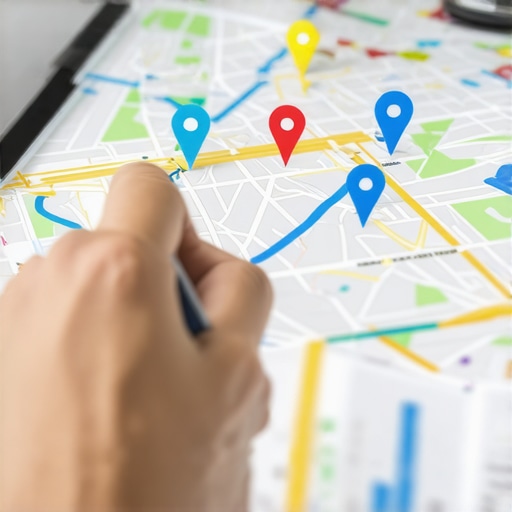
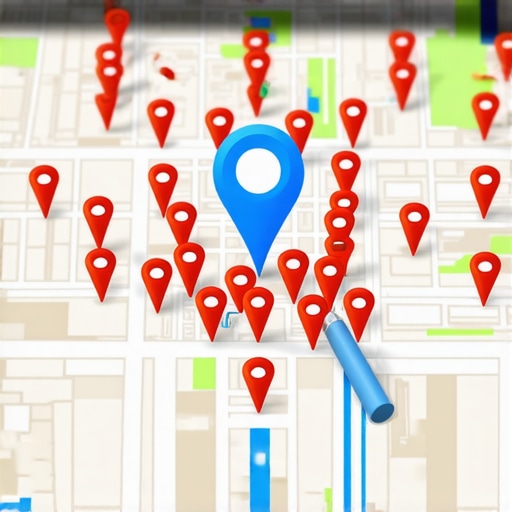
The three mile radius defines the proximity threshold where a local business achieves maximum visibility within the Google Map Pack. By analyzing hyperlocal search patterns and competitor density, businesses can optimize their service area boundaries to capture high-intent traffic from nearby customers. Most owners think they serve the whole city. The data says otherwise. Your power dies at the edge of your neighborhood. This is where the best ways to audit map rankings across different neighborhoods come into play. You need to see the grid. You need to know that at the corner of 5th and Main, you are number one, but at 7th and Main, you are number five. That drop of four spots is the difference between a busy phone and a silent office. We use heatmaps to visualize this. If you see a sudden hole in your heatmap, it usually means a competitor is gaming the system or you have a data conflict. Often, we find that fixing map pin drifts after updating service area boundaries is the only way to restore the signal. The pin must be precisely where the business operates. Even a drift of fifty feet can move you from one side of a neighborhood filter to the other. This is the microscopic math of local SEO. It is not about keywords; it is about the physics of the pin. If you want to expand, you do not just change your settings. You have to build local relevance in those new zones through customer check-ins and geo-tagged images.
Local Authority Reading List
- Professional GMB Audit Techniques
- Reversing a Hard Suspension Checklist
- Proximity Tracking for Growth
- Spotting Competitor Weaknesses
- Proximity Signals and SAB Rankings
Detecting and fighting competitor map spam
Competitor map spam involves the fraudulent use of keyword-stuffed business names, fake addresses, and bot-generated reviews to manipulate local search rankings. Identifying these spam attacks requires a forensic audit of competitor profiles to report violations of Google Business Profile terms of service. I have seen cafes lose half their business in a week because a competitor used a VPN to drop twenty fake reviews at midnight. It is a war out there. You have to know how to identify competitor map spam without using complex software just by looking at the patterns. If every five-star review comes from an account with only one review ever, it is a bot farm. If the business name includes five keywords that are not on their legal sign, it is a violation. We fight this by documenting the reality. I take photos of the actual storefronts. I show Google that the competitor is running a lead gen site out of a post office box. This is how we clear the map. When the spam is cleared, the legitimate businesses rise naturally. If you are suffering, check if the strategy we use to fight keyword stuffed business profiles can be applied to your niche. Google is slow, but they hate being lied to. A well-documented report with street view screenshots and business registry links is more powerful than any backlink. You have to protect your territory. If you do not report the spam, you are letting them steal your customers.
“Relevance in local search is a composite of proximity, prominence, and the forensic verification of physical entity existence.” – Location Intelligence Whitepaper
Schema errors and the invisible ranking killer
Schema markup errors create data conflicts that prevent search engine bots from accurately indexing local business information and NAP details. Correcting structured data mistakes is essential for triggering rich snippets and maintaining high trust scores within the Google Knowledge Graph. Many agencies skip the technical audit. They focus on the description, but why your content heavy gmb description is actually hurting your rank is because it distracts from the raw data. If your website schema says one thing and your GMB says another, the bot gets confused. It chooses the path of least resistance, which is usually to lower your rank. We have seen cases where fixing structured data errors that confuse google local bots led to a twenty percent increase in calls without changing a single word of copy. The bots want clean JSON-LD. They want to know your opening hours, your price range, and your exact latitude and longitude. If you have multiple locations, the confusion multiplies. You must consolidate. Look at how to consolidate old locations without losing your map history to keep your authority intact. A fragmented map presence is a weak map presence. Every listing should be a reinforced beacon of truth. When the code matches the physical reality, the algorithm rewards you with the top spot. The pin moves because the data allows it to move. Stop guessing and start auditing the technical layer that sits beneath the map.