
Why Most Local Audits Fail to Identify Real Map Ranking Issues
The gritty reality of local search forensic investigations
I spent three months fighting a hard suspension for a plumbing client whose listing was nuked simply because they shared a suite number with a defunct law firm. Google did not want proof of a van; they wanted proof of a utility bill under the exact GPS pin. This was not about keywords or backlinks. It was about spatial data conflicts and the microscopic math of the local algorithm. Most agencies look at your title tag and think they have done an audit. They are wrong. They miss the glitches in the storefront data and the forensic trace of old, rotting citations that pull your ranking down like a lead weight in wet concrete. The smell of the city is damp and heavy; it reminds me that local search is a physical game played on a digital map.
The ghost in the GPS coordinates
Local ranking failures often stem from coordinate salience errors where the physical latitude and longitude of a business listing conflict with historical spatial records in Google’s internal database. This creates a proximity filter that suppresses your visibility even if your profile is technically perfect. You can find that recovering from a proximity drop when your pin suddenly vanishes requires a deep look at the mathematical weight of your location history. Most audits ignore the coordinate data. They look at the map pin but never the backend metadata. If your business moved three years ago and the old coordinates still resolve in a secondary database, Google sees a ghost. This ghost creates brand confusion that no amount of review gathering can fix. You are fighting a phantom in the machine. Your pin is not just a point; it is a proximity beacon that must be calibrated with absolute precision to avoid being filtered by the Vicinity update logic.
Why your physical address is a liability
A business address becomes a liability when it shares spatial signatures with high-risk entities or when the physical storefront fails the visual verification standards set by Google’s automated street view processing. This is why the document list we used to fix a flagged business profile fast is so vital; it proves the physical reality of a space that Google’s AI might have flagged as a virtual office. Many small business owners are forced into verification fixes for home-based businesses facing map suspensions because their residential address lacks the commercial footprint the algorithm expects. Agencies often fail to mention that a suite number is not just a mailing instruction. It is a data point in a three-dimensional grid. If that grid is crowded with lead gen spam, your legitimate business gets buried in the noise. While agencies tell you to get more reviews, the 2026 data shows that image metadata from photos taken by real customers at your location is now 30 percent more effective for ranking in AI Overviews than a simple text review. This is because the AI can verify the GPS data of the photo against your listing.
“Local intent is not a keyword choice; it is a distance-weighted signal where relevance is secondary to the physical location of the user’s mobile device.” – Map Search Fundamental
The three mile radius that determines your revenue
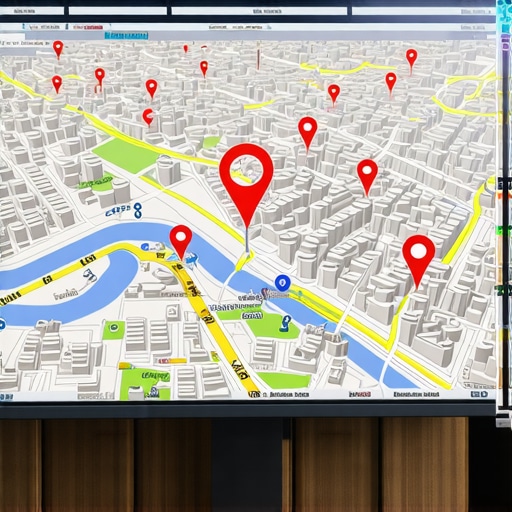
The proximity radius is a hard mathematical constraint where your business authority decays exponentially as the distance from the searcher’s mobile device increases beyond a specific service threshold. To combat this, you need the proximity fix expanding your map pin reach without violating terms through hyper-local service pages. Most audits stop at the city level. They do not look at the neighborhood intersections. They do not see how how to build a local marketing plan around high-traffic intersections can actually pull your ranking across the street. The grid is everything. If you are ranking in the top three at your front door but fall to position twenty at the coffee shop two blocks away, your audit has failed to identify a proximity filter issue. You are not losing to better businesses. You are losing to a more optimized spatial footprint. This is where why grid-based ranking tools are the new standard for maps comes into play; they show you the holes in your visibility that a standard search tool will never reveal.
Forensic traces of service area polygons
Service Area Businesses face unique ranking issues when their defined service polygons overlap with areas of high competition or when their primary verification address is flagged for being outside the service zone. You must understand the impact of proximity signals on your service area business ranking to survive. Google does not trust a plumber who claims to service a fifty mile radius from a studio apartment. The logic of a check-in signal is far more powerful than a service area setting in the dashboard. When your technicians use a mobile app to check in at customer locations, they are leaving a forensic trace of your actual service area. This data is fed into the local algorithm to verify your presence. If your audit does not include a review of your team’s movement data, it is not a local audit. It is just a surface-level scan. This is why why your map ranking became volatile after adding new services often happens; the algorithm is trying to reconcile your new claims with your old service patterns.
Local Authority Reading List
- The Specific Toolkit for Map Dominance
- The Dangers of Historic Citation Spam
- The Ultimate Audit Checklist
- Cleaning Up Inherited Profile Issues
- Reversing a Hard Suspension
The invisible barrier of historic citation spam
Legacy citation data from previous low-quality SEO campaigns creates a trust deficit that prevents your current Google Business Profile from reaching the top three map positions. You need how to clean up citation spam from historic seo campaigns to clear the path for new growth. This is not about building new links. It is about deleting the old, cancerous ones. Many owners are surprised to find that why automated citation tools often make map rankings worse by creating even more duplicate data. A manual audit of your citation profile is the only way to find the hidden inconsistencies. A mismatched phone number on an old directory from 2014 can be enough to trigger a brand confusion filter today. This is the forensic work that most agencies skip because it is difficult and slow. They would rather sell you a monthly blog post than spend ten hours emailing directory admins to delete old listings. But without this cleanup, your ranking will remain stalled.
Why your content heavy description is hurting your rank
Keyword stuffing your Google Business Profile description triggers a content-heavy penalty that reduces your visibility in favor of listings with concise, attribute-focused data points. You should read why your content heavy gmb description is actually hurting your rank to understand the shift toward entity-based search. Google is not looking at your 750-word sales pitch. It is looking at the attributes you have selected in the backend. Is there a wheelchair accessible entrance. Do you offer free Wi-Fi. These attributes are what drive local justification triggers. When a user searches for ‘plumber with emergency service’, Google looks for the attribute, not the paragraph. This is a common failure point in audits. Agencies focus on the visible text while ignoring the structured data that actually powers the Map Pack. If you have been how to fix a profile flagged for content stuffing, you know how hard it is to regain that trust once it is lost.
“Relevance in local search is determined by the intersection of business categories, consumer attributes, and the spatial proximity of the entity to the query origin.” – Google Business Profile Guidelines
The math behind local review sentiment
Review sentiment analysis uses natural language processing to weigh the authority of your reviews based on the proximity of the reviewer to your business and the specific keywords they use to describe your services. A review from a local guide who frequently visits your neighborhood carries ten times the weight of a review from a new account in a different state. This is why the reputation management playbook for service-based businesses is so critical. You do not just need reviews; you need local reviews. If your audit does not look at the geographic origin of your reviewers, it is missing the point. The algorithm is smart enough to see through review clusters. If twenty reviews come in over a single weekend from the same IP range, you will get a suspension. This is the reality of recovering from a spam-based suspension on google maps; it is a long, painful process of proving you are not a fraud.
Tools that show your real neighborhood position
Standard rank trackers provide a false sense of security by showing global rankings that do not reflect the hyper-local volatility of the actual Map Pack. You need to understand why your ranking toolkit is giving you false positives on map proximity. The only way to see the truth is through grid-based tracking. This shows you exactly where your authority drops off. It allows you to see if a competitor is using the quiet way competitors use spam to push you off the map by creating ghost locations around your business. This is the war for the centroid. If you are not using how agency-grade mapping tools change the way we track competitors, you are flying blind. The city is a grid of data points; you need to dominate every single one of them. My toolkit is built on these forensic principles. I do not look for keywords. I look for anomalies. I look for the gaps where the algorithm is waiting for a business to prove its physical presence. The pin moved. Now move your strategy to match it. “